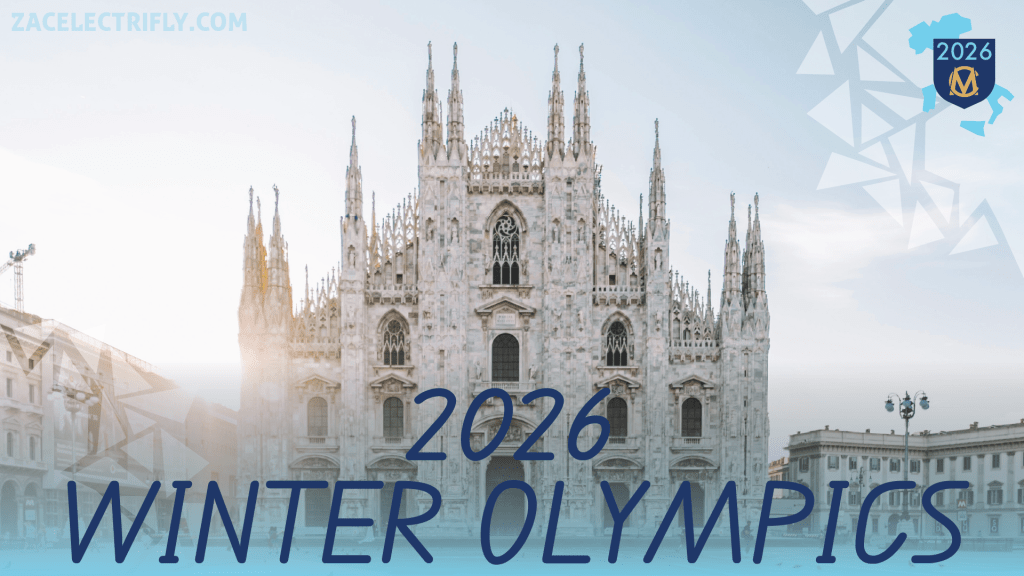

It’s that time again, the Winter Olympics are back, and this year they’re heading to Italy. Officially known as the XXV Winter Olympic Games, Milano Cortina 2026 promises to bring the global spotlight to northern Italy with the fitting motto, “It’s your vibe.” From February 4 to February 22, 2026, 2,871 athletes from 92 nations will compete in 116 events across 8 winter sports, spread out over 25 venues and 4 distinct clusters. Italy edged out Sweden to earn hosting rights, and, like many recent Olympic Games, there were lingering questions about whether all the venues would be ready in time. These Games also arrive in the long shadow of Beijing 2022, a Winter Olympics defined by heavy restrictions and controversy that still lingers in the collective memory. Still, the energy heading into Milano Cortina feels lighter and more optimistic. As with every Olympic year, I can’t help but feel excited. The Winter Games always put my favorite sport, ice hockey, front and center on the world stage.
The Milano Cortina 2026 logo is about as simple as it gets: a stylized “26” with Milano Cortina 2026 and the Olympic rings placed neatly underneath. It follows the current trend of minimalist Olympic branding, which often translates to being safe and, frankly, underwhelming. Yes, it’s modern and sporty, and it works well across both digital and physical assets. But for me, that’s where the positives end. I honestly think this is one of the weakest Olympic logos in history. Visually, the logo does very little in terms of storytelling. There’s nothing in it that speaks to Italy, its culture, its history, or its people. That’s especially disappointing when you compare it to the placeholder logo, which felt distinctly Italian and full of character. Beyond the logo itself, the broader visual identity doesn’t do much to help. The patterns and overall look of the Games feel oddly dated, which is surprising given that the Olympic Games have traditionally been leaders in global design trends. What makes this even more frustrating is that Italy is practically synonymous with great art and design. It’s the birthplace of some of the most influential artists in history and home to some of the most iconic sports and luxury brands in the world. When I think of Italian design, I think of Ferrari, Lamborghini, Maserati, Ducati, Gucci, and legendary football clubs like Juventus, Inter Milan, AC Milan, and Roma. There was a real opportunity here to elevate the Olympic brand into the realm of luxury and craftsmanship, to present Italy itself as a world-class brand on one of the biggest stages imaginable. Instead, we ended up with a logo that feels more like it was designed to live quietly as an app icon than to represent a once-in-a-generation global event.
The Olympic torch for Milano Cortina 2026 is where the design language finally feels unmistakably Italian. It leans heavily into luxury branding, and while the overall shape is fairly simple, the execution is nothing short of phenomenal. The refined color palette and polished chrome finish elevate the torch beyond a functional object and turn it into something that feels premium, elegant, and intentional, more like a piece of high-end industrial design than just a vessel for the Olympic flame. That said, the torchbearer uniforms tell a very different story. Their bright, colorful aesthetic clashes with the sleek, luxurious feel of the torch itself, creating a visual disconnect that’s hard to ignore. Instead of complementing the torch’s design, the uniforms compete with it, diluting the impact of what is otherwise a standout element of these Games. In many ways, they absolutely knocked it out of the park with the torch, and that success only makes me wish the rest of the Milano Cortina 2026 design had reached the same level of ambition and cohesion.
The medal design for the Milano Cortina 2026 Olympics is relatively straightforward at first glance. On the surface, the medals appear fairly basic, almost understated. But it’s in the details where the design truly shines and quietly elevates itself into the realm of luxury. The result is a thoughtful balance between minimalism and refinement, a design that feels intentional without trying too hard. While my personal favorite Olympic medal design remains Sochi 2014, these medals succeed in exactly what they set out to do. They don’t play it too safe, yet they also avoid being overly bold. That’s a difficult line to walk, especially considering that Olympic medals often swing too far in one direction, either aggressively experimental or overly minimal. I also really admired the Paris 2024 medals; Paris and Sochi both showed the world how medal design could be elevated to an entirely new standard. Milano Cortina 2026 tells a different story. These medals seem designed to honor the athletes without overshadowing them. In the best examples of elite luxury design, the object enhances the person using or wearing it without demanding attention for itself. That philosophy is clearly at work here. The medals don’t scream for focus; instead, they quietly draw attention to the achievements of the athletes themselves. In its own restrained way, that’s a bold and confident design choice.
Milano Cortina 2026 will be spread across 25 event venues organized into four clusters in northern Italy, and for the most part, that’s a good thing. The majority of these venues already existed or are temporary builds, which helps avoid one of the biggest long-term failures of past Olympic Games: billion-dollar stadiums left abandoned once the flame goes out. Personally, I’m firmly in the camp that if most of the venues don’t already exist, or don’t have a clear post-games purpose, then a country shouldn’t be allowed to host the Olympics in the first place. The biggest venue-related storyline heading into these games has centered on hockey. At one point, there were serious concerns that the main hockey arena wouldn’t be completed in time, with construction continuing right up to the start of the tournament. Adding to the anxiety, the rink itself was set to be smaller than an NHL-sized arena, raising questions about ice quality and overall playability. Even now, there are lingering concerns about the long-term viability of the arena and the ice surface. The largest venue of the Games will be San Siro, officially known as the Milano San Siro Olympic Stadium during the Olympics. With a capacity of 80,018, it will host the opening ceremony and serves as the legendary home of both AC Milan and Inter Milan. Hockey will take center stage at PalaItalia, known for the Games as the Milano Santagiulia Ice Hockey Arena. The arena is brand new and holds 16,000 spectators, but as of this writing, it has hosted just one hockey game, hardly an ideal testing history for an Olympic venue. One of the most unique and visually striking venues in Milano Cortina 2026 is the Verona Arena. Built nearly 2,000 years ago, the 1,996-year-old structure will host the closing ceremonies, blending ancient history with a modern global spectacle in a way only Italy really can. Another venue I really appreciate is the Stadio Olimpico del Ghiaccio, originally built for the 1956 Winter Olympics. Though it’s a traditional hockey venue, it will be repurposed for curling this time around, a great example of Olympic infrastructure being thoughtfully reused. That said, I still think there should be far more test events for the hockey venues. Ideally, host nations should stage major tournaments like the IIHF World Championships and the IIHF World Junior Championships in the same arenas leading up to the Olympics. Doing so would properly stress-test the venues, work out any issues, and build excitement for the Games themselves. If hockey is going to be front and center on the world stage, the venues should feel battle-tested long before the puck drops at the Olympics.
A total of 92 nations, along with the Independent Olympic Athletes, have qualified for the Milano Cortina 2026 Winter Olympics. Russia and Belarus remain suspended from Olympic competition, despite significant discussion throughout 2025 about the possibility of their return. Ultimately, that return never materialized. While some athletes from those countries will compete under the Independent Olympic Athletes banner, eligibility was determined sport by sport by each international federation. The IOC also made it clear that Independent Olympic Athletes would not be allowed to participate in team events, eliminating any possibility of their inclusion in tournaments such as ice hockey. That decision carries extra weight for hockey fans, as it closed the door on Alexander Ovechkin (the NHL’s all-time leading goal scorer) appearing in the Olympics. Had Russia been allowed to compete, Milano Cortina 2026 would almost certainly have been his final opportunity on the Olympic stage. Instead, the men’s and women’s hockey tournaments will move forward without Russian or Belarusian representation, marking another major shift from previous Olympic cycles. This year’s Games will also feature several historic firsts. Benin, Guinea-Bissau, and the United Arab Emirates are all making their Winter Olympic debuts, highlighting the continued growth of winter sports beyond traditional regions. The United States leads all countries with 233 athletes qualified. Benin, Guinea-Bissau, the Independent Olympic Athletes, Kenya, Singapore, South Africa, the United Arab Emirates, Uruguay, and Venezuela will be here after missing the Winter Games after missing Beijing 2022, while American Samoa, Belarus, Ghana, Peru, the Russian Olympic Committee, Timor-Leste, and the United States Virgin Islands qualified in 2022 but will not appear in Milano Cortina. Looking back at the most recent Winter Olympics provides some context for the competitive landscape. Norway dominated Beijing 2022, winning the most gold medals and the most medals overall. Germany and the United States followed closely in gold medals, while the ROC and Germany rounded out the top three in total medal count. As Milano Cortina 2026 approaches, those results loom large, setting the stage for another intense and unpredictable Winter Games.
Milano Cortina 2026 will showcase 116 medal events across 16 disciplines, marking one of the most expansive Winter Olympic programs to date. Several new and returning events headline the schedule, including men’s and women’s dual moguls in freestyle skiing, the return of men’s and women’s doubles in luge, team alpine combined events, women’s large hill individual ski jumping, and a mixed relay in skeleton. The alpine mixed team parallel event has been dropped, while alpine combined, team ski jumping, and Nordic combined all transition from individual formats to two-person teams. For the first time ever, women will race the same distances as men in cross-country skiing, a major milestone for gender equality at the Winter Games. Ski mountaineering also makes its Olympic debut, adding another endurance-heavy, mountain-based challenge to the program. Overall, the event additions feel like a positive evolution for the Games.
Alpine skiing will feature 306 athletes competing across 10 events. Switzerland dominated the discipline at Beijing 2022, winning the most gold medals and the most medals overall. The United States left Beijing with just one silver medal in alpine skiing and will be aiming to improve on that result, with hopes of climbing to the top step of the podium. Alpine skiing remains one of the most visually thrilling Olympic sports, as the speed and risk are impossible to miss when athletes attack the course at full throttle.
Biathlon brings together 210 athletes across 11 events, and it remains one of the most demanding sports in the Winter Olympics. Norway was the clear powerhouse at Beijing 2022, leading both gold medals and total medals, while the United States failed to reach the podium. The blend of endurance skiing and precision shooting makes biathlon endlessly compelling, as a single missed target can instantly change the outcome of a race.
Bobsleigh will feature 165 athletes competing in four events. Germany once again set the standard in Beijing, earning the most gold medals and the most medals overall. The United States had a strong showing with one gold medal and three total medals. One of the feel-good stories in 2026 is the return of Jamaica, which failed to qualify in 2022 but is back on the Olympic stage this year.
Cross-country skiing includes 296 athletes across 12 events. Norway topped the gold medal table in Beijing, while the ROC collected the most medals overall. The United States finished with two medals in 2022. While not always the most electrifying event, cross-country skiing is one of those sports that rewards patience, endurance, and pure grit, making it an easy watch when it’s on.
Curling will see 112 athletes from 14 nations competing in three events, and it has already made headlines due to a power outage on the opening day of competition. The Cortina Olympic Stadium, typically home to ice hockey, has been transformed into a curling venue and provides a stunning backdrop. In Beijing, Italy, Great Britain, and Sweden each won one gold medal, while Sweden led in total medals with three. The United States did not medal in 2022 but will be looking to change that in 2026, especially after pulling off some early upsets. Curling’s mix of strategy, precision, and accessibility makes it one of the most enjoyable sports to follow.
Figure skating features 142 competitors across five events. The United States won the most gold medals in the discipline at Beijing 2022, while the ROC led in total medals. With Russia not competing in 2026, the United States has a strong opportunity to not only repeat as the gold medal leader but potentially dominate the overall medal count as well. Historically, Russia has been a figure skating powerhouse, so the big question becomes which nation rises to fill that void?
Freestyle skiing includes 284 athletes competing in 15 events. China led the gold medal count in Beijing, while the United States topped the overall medal standings. Team USA will be aiming to reclaim the top spot in both categories in 2026. Freestyle skiing continues to be one of the most exciting Olympic sports, with ski cross standing out as a favorite thanks to its chaotic, head-to-head racing style.
Ice hockey remains the centerpiece of the Winter Olympics, with 530 athletes from 13 nations competing in Milano Cortina. The biggest storyline is the return of NHL players, who last participated in 2014. Their planned return in 2022 was postponed, making 2026 a massive moment for the sport and the Games as a whole. Finland won gold in the men’s tournament in Beijing, with the ROC and Slovakia also medaling, while Canada claimed gold in the women’s tournament, followed by the United States and Finland. The absence of Russia clears a path for what feels like an inevitable United States–Canada showdown in both tournaments. With renewed rivalry, recent international competition fueling the hype, and a long-standing U.S. men’s gold medal drought stretching back 46 years, expectations are sky-high.
Luge will feature 106 athletes across five events. Germany swept all gold medals in Beijing and led the overall medal count. The United States did not medal in 2022 but previously reached the podium in 2018 and will be eager to return. Like all sledding sports, luge delivers pure speed and high-stakes intensity.
Nordic combined includes 36 athletes competing in three events. Norway dominated the discipline in Beijing, winning the most gold and total medals. The United States has not medaled in Nordic combined since 2010 and will be looking to end that drought in 2026.
Short-track speed skating brings 112 athletes across nine events. South Korea, China, and the Netherlands tied for the most gold medals in Beijing, with South Korea leading overall. The United States did not medal in 2022 after reaching the podium in 2018 and will be aiming for a rebound. The tight turns, constant contact, and blistering pace make this one of the most entertaining racing sports at the Games.
Skeleton features 50 athletes across three events, and Germany once again enters as the dominant force after sweeping the medals in Beijing. The United States has not medaled in skeleton since 2014 and will be hoping to change that. Few Olympic sports match the intensity of skeleton, with athletes hurtling headfirst down the track at terrifying speeds.
Ski jumping includes 100 athletes competing in six events. Slovenia topped both the gold medal and overall medal counts in Beijing. The United States has not medaled in ski jumping since 1924, making this one of the longest medal droughts in Olympic history. While the sport isn’t for everyone, the sheer courage required to launch off the hill makes it impossible not to respect.
Ski mountaineering makes its Olympic debut with 36 athletes competing. The sport requires athletes to climb and descend mountains on skis, blending endurance, technique, and strategy. It’s one of the most intriguing additions to the program and one worth watching closely.
Snowboarding features 238 athletes across 11 events. Austria and the United States tied for the most gold medals in Beijing, while Canada led in total medals. The United States will once again be chasing both gold and overall dominance, with snowboard cross standing out as one of the must-watch events.
Finally, speed skating will include 164 athletes competing in 14 events. The Netherlands dominated Beijing with the most gold medals and the most medals overall. The United States earned one gold and three total medals and will be looking to build on that success in 2026. Speed skating remains a fascinating blend of technique, power, and endurance, and it continues to be one of the most respected disciplines on the Olympic ice.
The Milano Cortina 2026 Olympic pictograms embrace a clean, modern visual language that blends Italian design heritage with the energy of winter sport. Built around sharp geometry and fluid motion, the pictograms use bold, simplified forms to clearly represent each discipline while still feeling expressive and dynamic. Rather than relying on heavy outlines or overly literal details, the designs focus on movement (skiers lean into turns, skaters stretch into strides, and hockey players are frozen mid-action), creating a sense of speed and momentum across the full system. A key feature of the 2026 pictograms is their modular structure. Each icon is constructed from consistent line weights, angles, and proportions, allowing all sports to feel unified even as they depict very different movements and equipment. The figures are abstracted just enough to be universal and instantly recognizable, avoiding national or cultural markers while still feeling human and athletic. Negative space plays an important role, helping define limbs, equipment, and motion paths without cluttering the design. Visually, the pictograms reflect the alpine setting of northern Italy. Many of the angles and cuts echo mountain peaks, ski edges, and the sharp contrast between snow and rock. There’s also a subtle nod to Italian graphic tradition, with a balance of elegance and functionality that keeps the icons readable at any scale, from massive venue signage to mobile screens and broadcast graphics. Overall, the Milano Cortina 2026 pictograms are designed to be more than just wayfinding symbols; they act as a visual identity for the Games, capturing the rhythm, precision, and excitement of winter sport in a distinctly modern Olympic style.
Milano Cortina 2026 officially got underway on February 4, 2026, kicking off what promises to be a packed and unforgettable Winter Olympics. The Opening Ceremonies are set for February 6, while competition began even earlier, with ice hockey action starting on February 5. The men’s ice hockey tournament will drop the puck a bit later, beginning on February 11, adding another major milestone to the Olympic schedule. From there, the Games quickly shift into full gear. The first medals will be awarded on February 7, setting the tone for more than two weeks of nonstop competition across the Italian Alps. All of it will culminate with the Closing Ceremonies on February 22. With marquee events, stacked schedules, and storylines building across nearly every sport, Milano Cortina 2026 is shaping up to be one of the most memorable Winter Olympics yet.




 Zac Electrifly
Leave a comment