


The Tahoe Knight Monsters returned to the ice for game fifty-three of the season, squaring off once again against the Utah Grizzlies in a pivotal divisional matchup. With the regular season winding down, every point carries added weight, and this contest had important implications for both teams’ positioning in the standings. Tahoe entered the night sitting fourth in the division with a 26-21-5 record. While that mark has kept them firmly in the playoff conversation, consistency has been an ongoing challenge. The Knight Monsters were also looking to bounce back after suffering a loss to the Grizzlies in their previous meeting. Responding after a defeat (especially against the same opponent) is often a telling measure of a team’s resilience, focus, and ability to make adjustments. Tahoe needed a sharper effort, particularly in tightening up defensively and capitalizing on offensive opportunities. As the ECHL affiliate of the Vegas Golden Knights, Tahoe continues to develop players within a competitive system that mirrors its NHL parent club’s identity, speed, structure, and pressure. Performances at this stage of the season not only affect playoff positioning but can also influence player development and potential call-ups. That added layer of motivation is always present in affiliate hockey.
On the other side, Utah came into the matchup seventh in the division with a 20-25-7 record. While their standing may not reflect dominance, the Grizzlies have shown they can be dangerous, particularly when building momentum. They were fresh off a win over Tahoe and were looking to string together back-to-back victories against the same opponent, a confidence booster for any team trying to climb the standings. Utah serves as the ECHL affiliate of the Colorado Avalanche, giving them a direct developmental pipeline to one of the NHL’s premier organizations. Like Tahoe, the Grizzlies are balancing team results with player progression. For a club currently outside the top tier of the division, stacking wins (especially against playoff-positioned teams) can shift the narrative quickly. Competing in the ECHL means embracing the grind of a long season, where familiarity between opponents breeds intensity. By game fifty-three, there are no secrets. Systems are known, tendencies are studied, and execution becomes the difference-maker. For Tahoe, this matchup was about reasserting themselves in the rivalry and protecting their spot in the standings. For Utah, it was an opportunity to chip away at the gap and prove they could compete with and beat, a team above them. With playoff races tightening and every point magnified, this divisional clash carried the kind of edge and urgency that defines late-season hockey.

Jordan Papirny got the start in net for Tahoe, marking his 24th appearance of the season for the Knight Monsters. Papirny has been a steady presence between the pipes, and with the games becoming increasingly meaningful, his consistency continues to be a key factor in Tahoe’s push toward the postseason. Opposing him was Hunter Miska, making just his third appearance of the season for Utah. With limited action under his belt, Miska had an opportunity to make a statement against a playoff-positioned opponent.
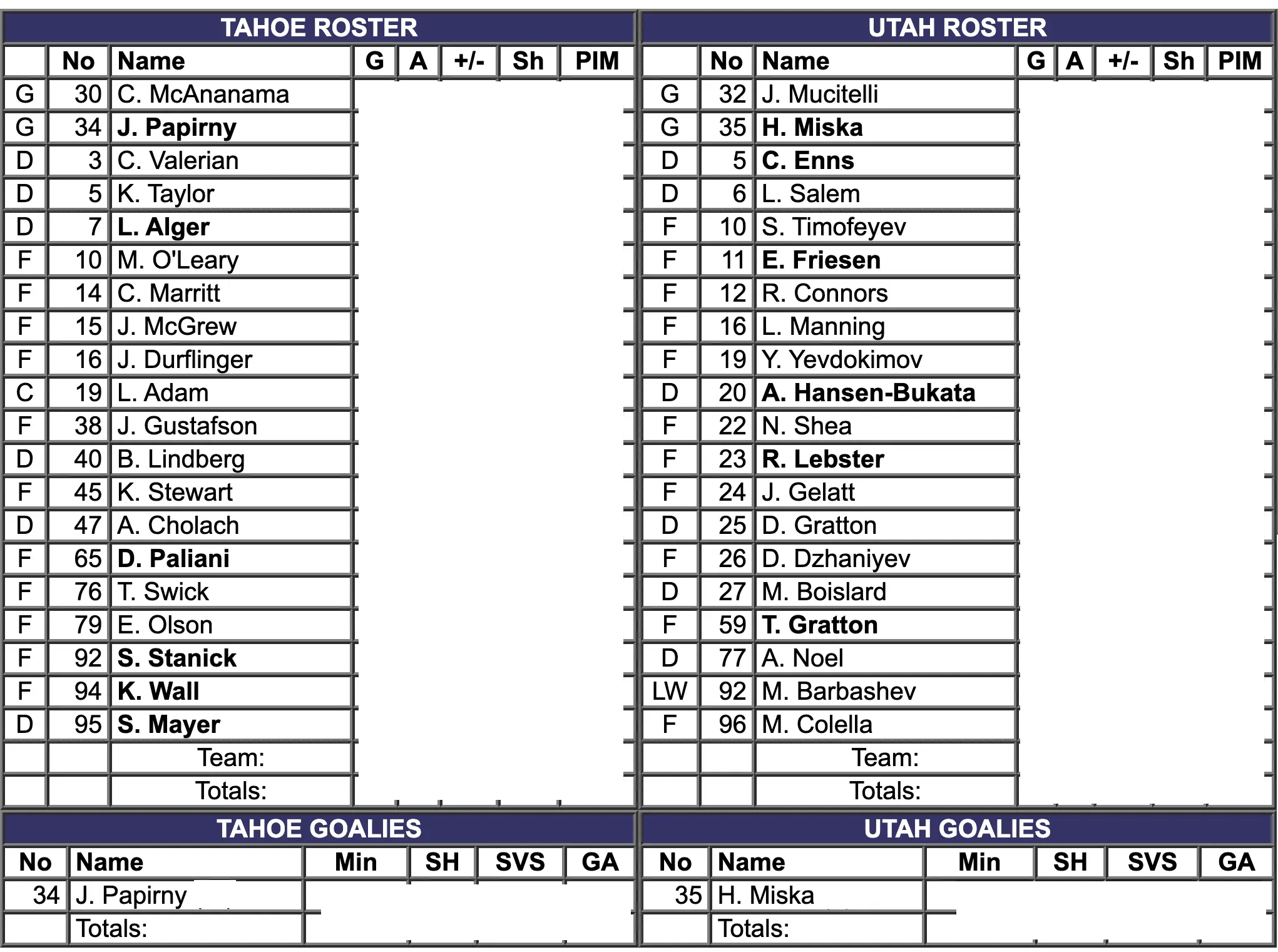

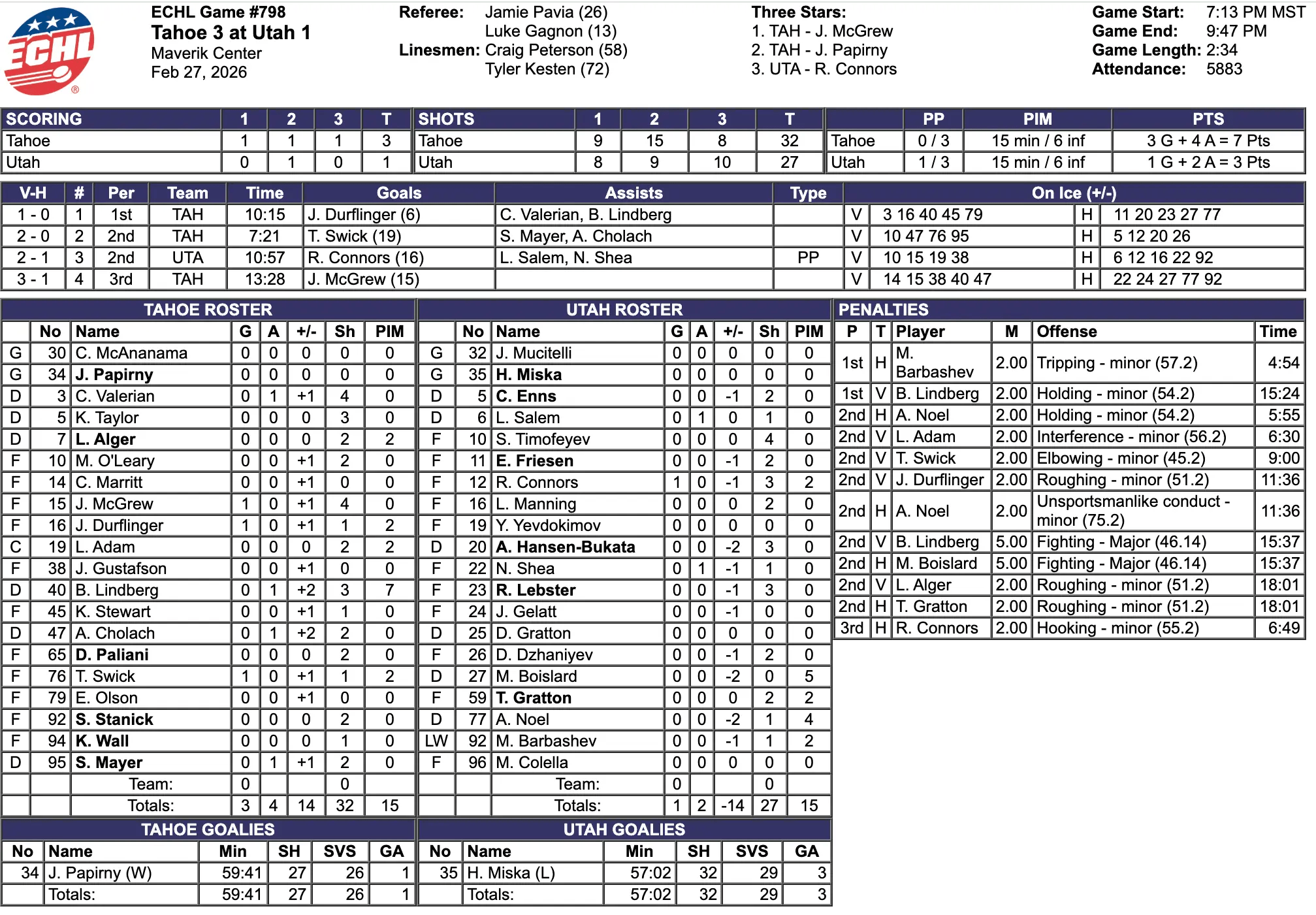
Just four minutes into the game, Utah’s Maxim Barbashev was called for tripping, giving Tahoe an early power-play opportunity and setting the tone for a physical, penalty-filled night. Midway through the opening period, Jake Durflinger broke the scoreless tie. Durflinger’s goal gave the Knight Monsters a 1-0 lead and was assisted by Benjamin Lindberg, who continued to make his presence felt in multiple facets of the game.
With under five minutes remaining in the first period, Lindberg was called for holding, but Tahoe’s penalty kill held firm. After twenty minutes of play, the Knight Monsters carried a 1-0 lead into the intermission, backed by disciplined defensive structure and steady goaltending from Papirny.

Five minutes into the second period, Andrew Noel of Utah was called for holding, giving Tahoe another chance on the power play. However, momentum briefly shifted when Luke Adam of Tahoe was assessed an interference penalty during the man advantage, creating open ice and changing the dynamic. Less than a minute later, Trent Swick capitalized, extending Tahoe’s lead to 2-0. Swick’s goal, assisted by Samuel Mayer and Artur Cholach, provided crucial breathing room and highlighted Tahoe’s ability to generate offense despite special teams complications.
The physicality ramped up from there. Nine minutes into the second period, Swick was called for elbowing. On the ensuing power play, Reilly Connors got Utah on the board, finishing a play set up by Luc Salem and Neil Shea to cut the deficit to 2-1. That goal injected life into the Grizzlies and shifted momentum in what was becoming an increasingly heated matchup.
Penalties continued to stack up late in the period. With under nine minutes remaining, Jake Durflinger of Tahoe was called for roughing, while Andrew Noel received an unsportsmanlike conduct penalty at the same time. Under five minutes later, Lindberg dropped the gloves with Mathieu Boislard, with both players receiving fighting majors. Then, with under two minutes left in the period, Tyler Gratton of Utah and Linden Alger of Tahoe were each called for roughing. The second period was defined as much by physical intensity as it was by scoring, and Tahoe held a narrow 2-1 lead heading into the third.

Six minutes into the final frame, Reilly Connors was called for hooking, but Utah managed to avoid further damage. As the clock wound down and Utah pressed for the equalizer, Jake McGrew delivered the dagger. With under seven minutes remaining in regulation, McGrew scored an unassisted goal to give Tahoe a 3-1 cushion. The insurance marker proved decisive and allowed Tahoe to close things out with confidence.
When the final horn sounded, the Knight Monsters secured a 3-1 victory.

https://echl.com/videos/tahoe-knight-monsters-vs-utah-grizzlies-feb-27-2026

This was a mature, structured win for Tahoe. After trading momentum in the second period and navigating a parade to the penalty box, the Knight Monsters didn’t unravel. Instead, they leaned on strong goaltending, timely scoring, and defensive composure. Papirny stands out, especially during moments when Utah was building pressure and attempting to shift the game’s energy. Tahoe’s ability to respond after Utah cut the lead to one was crucial. Rather than sitting back, they continued to generate chances, eventually earning the insurance goal from McGrew. The special teams battle was nearly even on paper, but Tahoe’s lone power-play conversion and perfect penalty kill proved to be the difference. The physical nature of the second period could have tilted the game either way. Instead of allowing the emotion to cost them, the Knight Monsters maintained discipline when it mattered most in the third period. That kind of composure will be critical down the stretch and into the playoffs. With the standings tightening and every point magnified, this was the type of performance Tahoe needed, structured, resilient, and efficient. Now the focus shifts to finishing the job in Utah in what will be a meaningful final visit before relocation.

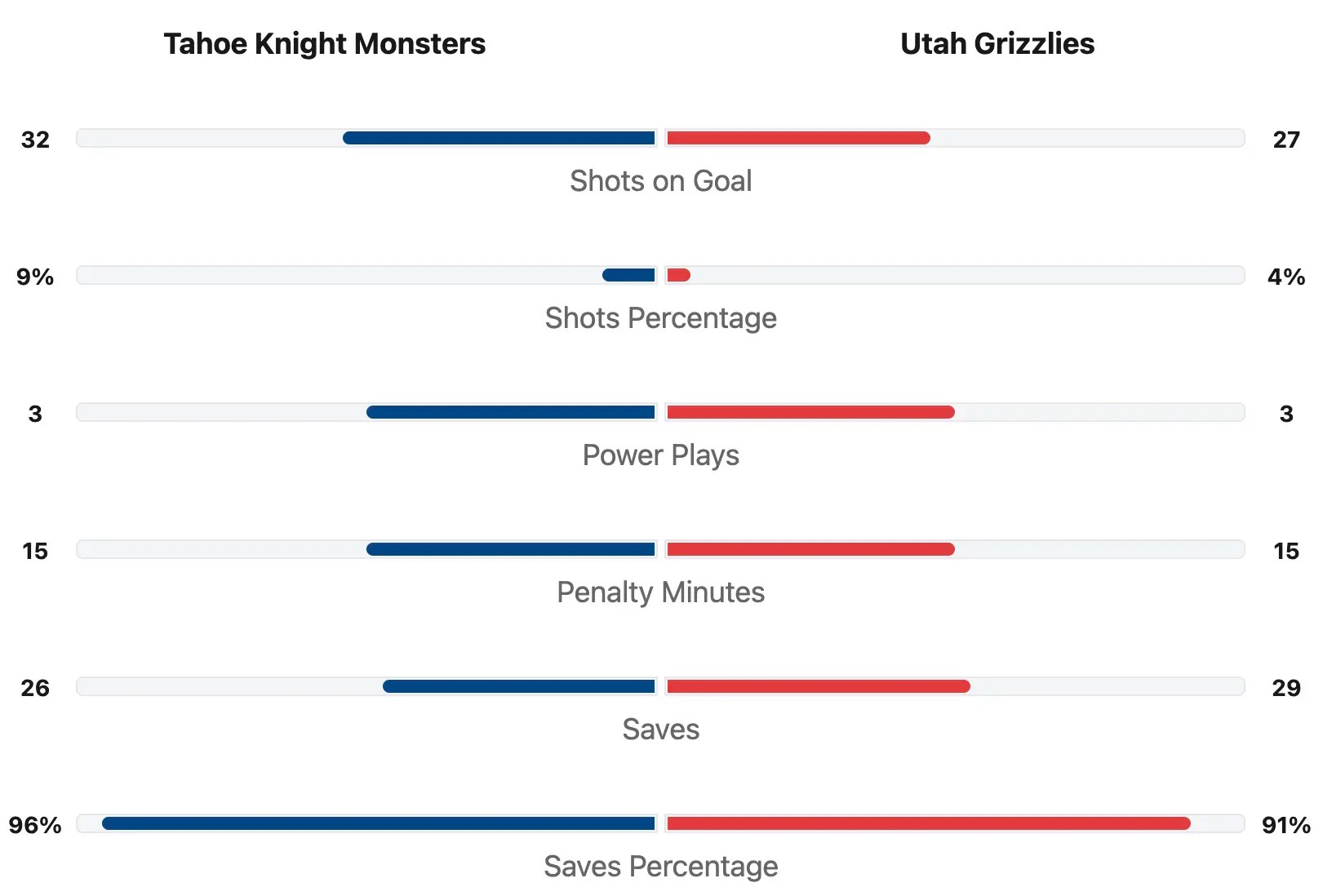
Statistically, Tahoe held a slight edge throughout the night. They outshot Utah 32-27, finishing with five more shots overall. Tahoe posted a 9% shooting percentage compared to Utah’s 4%. Both teams had three power-play opportunities and each accumulated 15 penalty minutes, reflecting the game’s physical nature. Tahoe converted once on the power play, finishing 1-for-3, while Utah went 0-for-3.
Papirny was outstanding, stopping 26 of 27 shots for a 96% save percentage, anchoring Tahoe through key stretches—especially during Utah’s push in the second period. Miska turned aside 29 of 32 shots for a 91% save percentage in the loss.

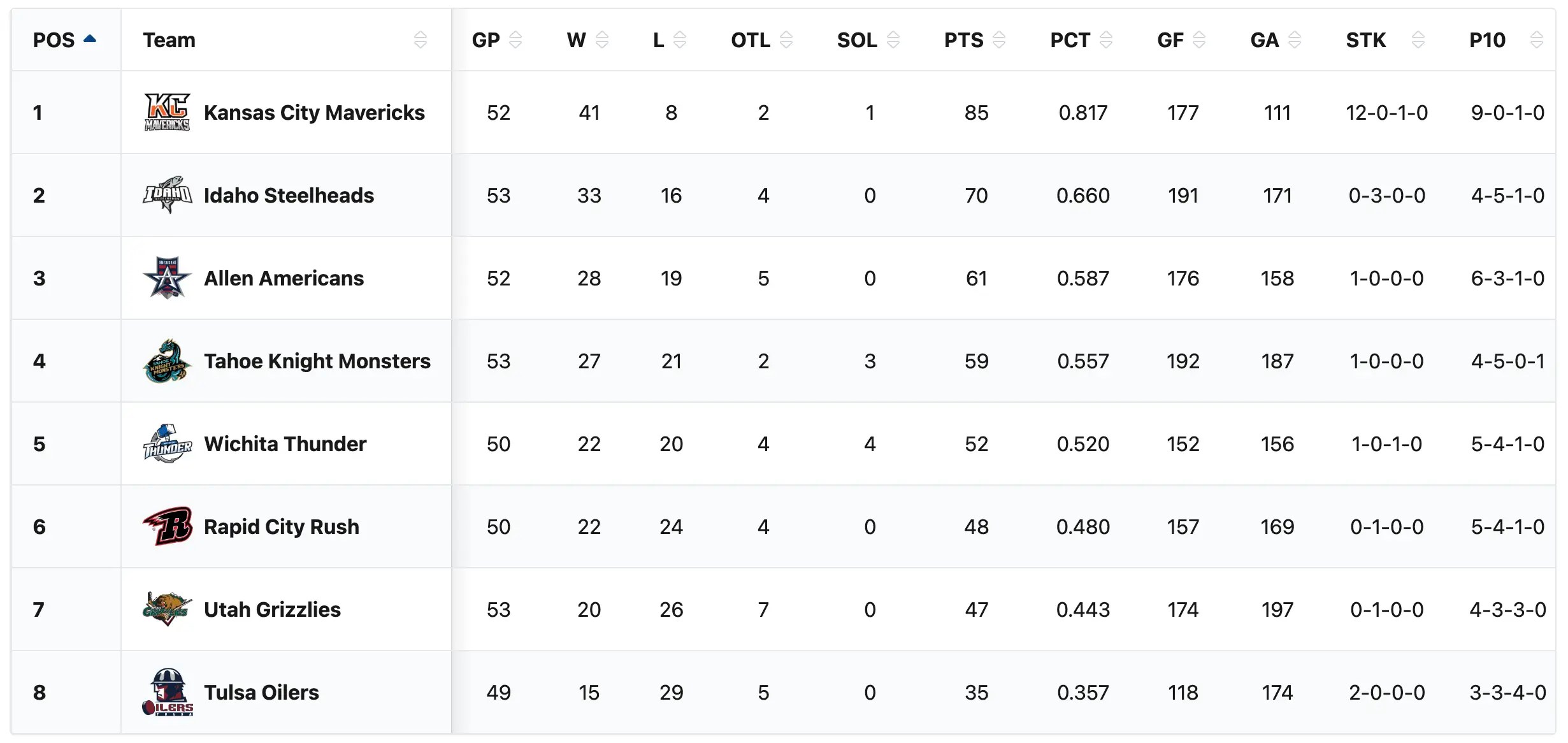
With the win, the Knight Monsters improved to 27-21-5, good for 59 points in 53 games. They remain fourth in the Mountain Division of the ECHL Western Conference. Tahoe now sits 13th overall in the league and sixth in the conference standings. While they remain 26 points back of the top spot in the league, conference, and division, the more immediate focus is divisional movement. Tahoe is just two points, or one win away from reclaiming third place in the division and holds a seven-point cushion over fifth place. Most importantly, the Knight Monsters remain firmly in a playoff position and are not currently in danger of falling out of the race.

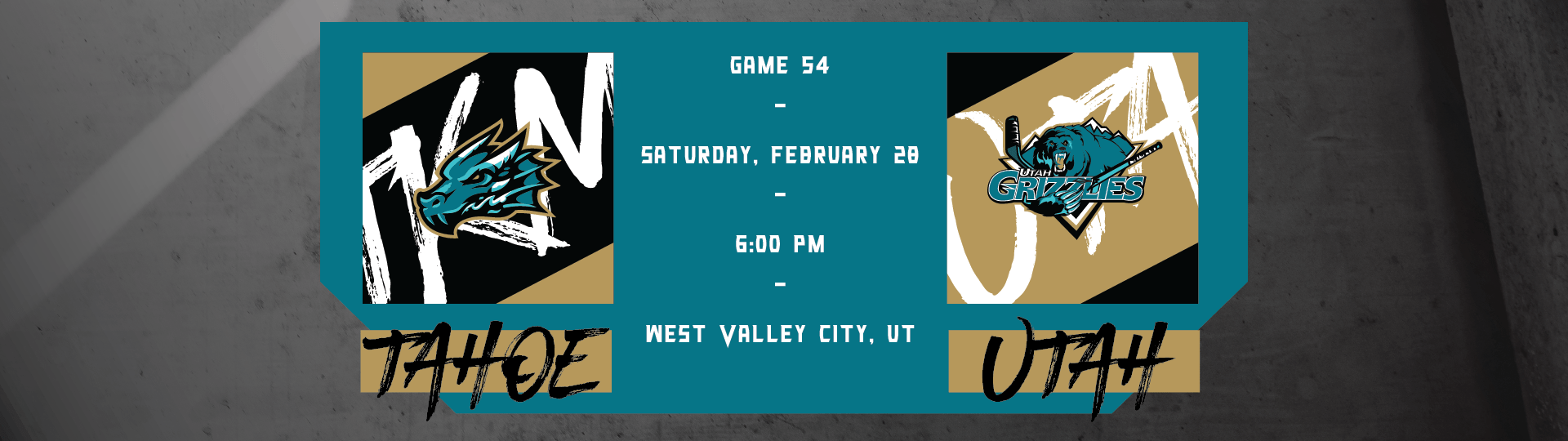
Tahoe will face Utah again on Saturday, February 28th, with puck drop scheduled for 6:00 PM in Utah. That matchup carries additional significance, as it will mark the final time Tahoe plays in Utah before the Grizzlies relocate, unless the two teams meet again in the playoffs. That added layer of context gives the upcoming contest even more emotional weight.
 Zac Electrifly
Leave a comment