
Game Info:
Tahoe Knight Monsters vs Kansas City Mavericks
Game #: 2026 ECHL Kelly Cup Playoffs Mountain Division Semifinals Game Three
Date: Wednesday, April 29, 2026
Puck Drop: 7:00 PM
Location: Tahoe Blue Event Center, Stateline, Nevada

The Tahoe Knight Monsters return home for a pivotal Game Three matchup against the Kansas City Mavericks in the 2026 Kelly Cup Playoffs Mountain Division Semifinals, with the series shifting to the Tahoe Blue Event Center. Facing a 2-0 series deficit, Tahoe finds itself in a must-win situation as the pressure mounts in front of a home crowd eager to see a turnaround. Tahoe enters this contest after a difficult start to the postseason, holding a playoff record of 0-1-1 following an overtime loss in Game Two. That result not only deepened their hole in the series but also extended a troubling trend; this team has now dropped six consecutive playoff games. They have not won a playoff game since April 25, 2025. For a team that finished fourth in the division during the regular season with a 35-30-7 record, the postseason has so far exposed the fine margins between competing and closing out games. As the ECHL affiliate of the Vegas Golden Knights, expectations for development and competitiveness remain high. On the other side, Kansas City has looked every bit like the league’s top team. The Mavericks dominated the regular season, finishing first not just in the Mountain Division, but across the entire ECHL and conference with a remarkable 55-12-5 record. That dominance has carried seamlessly into the playoffs, where they hold a perfect 2-0-0 record after back-to-back wins over Tahoe. As the ECHL affiliate of the Seattle Kraken, Kansas City continues to showcase depth, structure, and confidence, traits that have made them a formidable opponent. Game Three marks the third contest of the series for both teams, but it already feels like a defining moment. Tahoe is not only searching for its first win of this postseason, but also its first-ever playoff victory against Kansas City. The inability to solve the Mavericks in high-stakes situations has become a storyline of its own, adding another layer of urgency to this matchup. With their season beginning to hang in the balance, the Knight Monsters must find a way to shift momentum, capitalize on home ice, and rewrite the narrative before the series slips further out of reach.

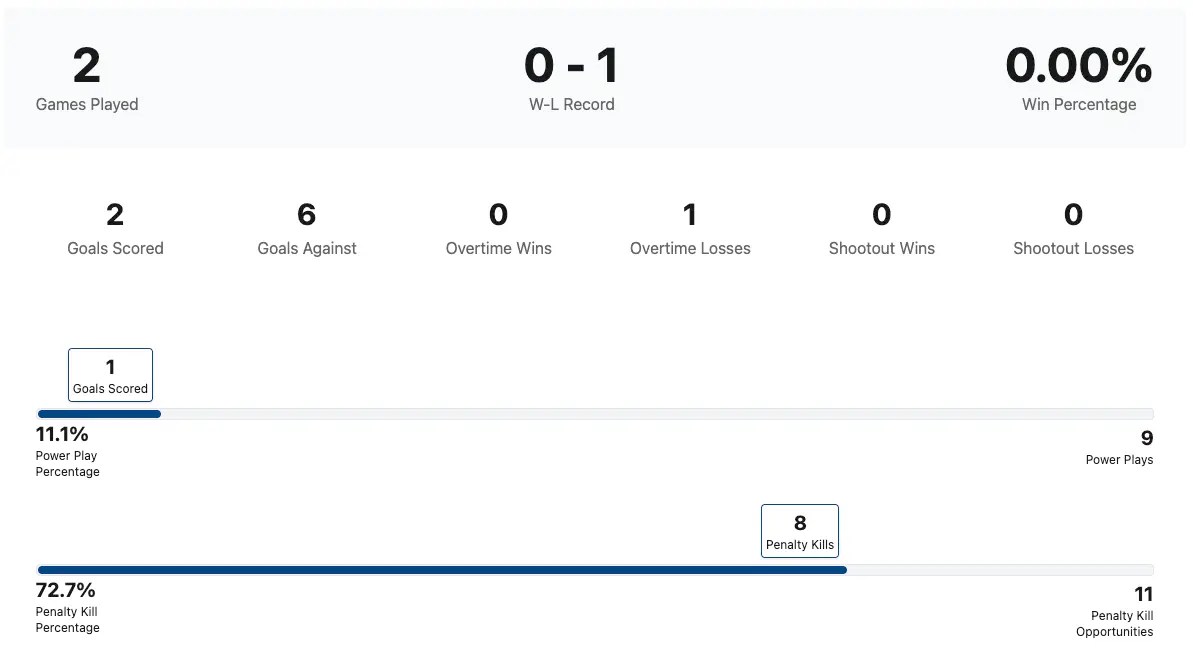
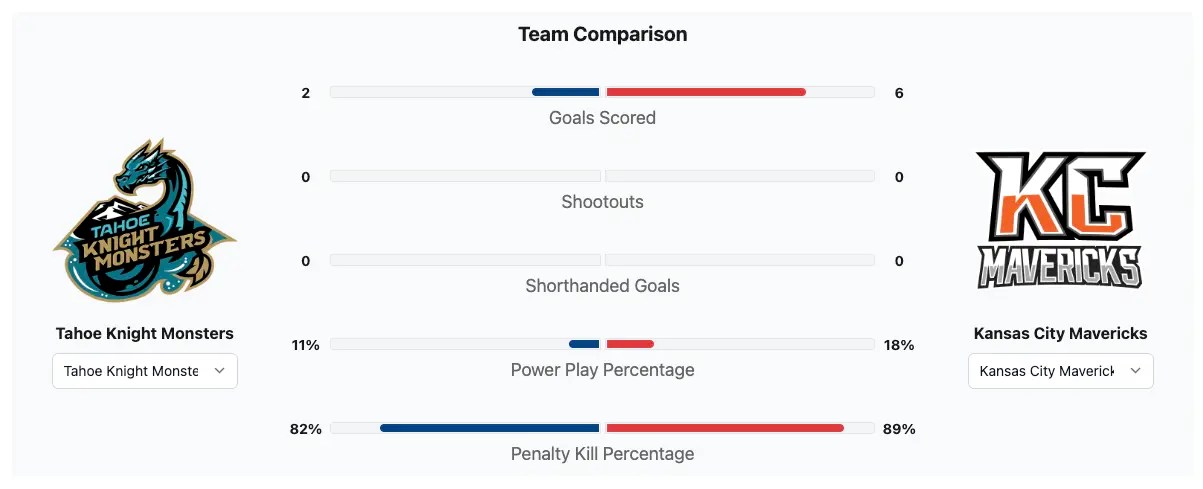
Through their first two games in the 2026 Kelly Cup Playoffs, the Tahoe Knight Monsters are still searching for their first postseason victory, a slow start that has quickly put them on the defensive in their series. With an 0-2 record, Tahoe holds a playoff win percentage of 0.00%, a stark reflection of the uphill climb they now face. While the sample size is still small, the early numbers point to several areas that need immediate improvement if they hope to turn things around. Offensively, the Knight Monsters have struggled to generate consistent scoring chances, managing just two goals across both games. That translates to an average of one goal per game, a figure that makes it incredibly difficult to keep pace in playoff hockey, where scoring opportunities are often limited and must be capitalized on. On the other end of the ice, Tahoe has allowed six goals, averaging three goals against per game, resulting in a -4 goal differential. This imbalance highlights the gap between their current level of execution and what is required to compete with a high-powered opponent. Special teams have also played a significant role in Tahoe’s early postseason challenges. On the power play, the Knight Monsters have converted just once on nine opportunities, giving them an 11% success rate. While they have shown some resilience on the penalty kill, successfully killing off 8 of 11 opposing power plays for a 72% kill rate, it hasn’t been enough to offset the overall deficit. Discipline has been another concern, as Tahoe has already accumulated 36 penalty minutes in just two games, an issue that not only disrupts momentum but also gives opponents additional chances to exploit mismatches. Taken together, these numbers paint a clear picture: the Knight Monsters must find more offensive production, tighten up defensively, and play a more disciplined game if they want to get back into the series.
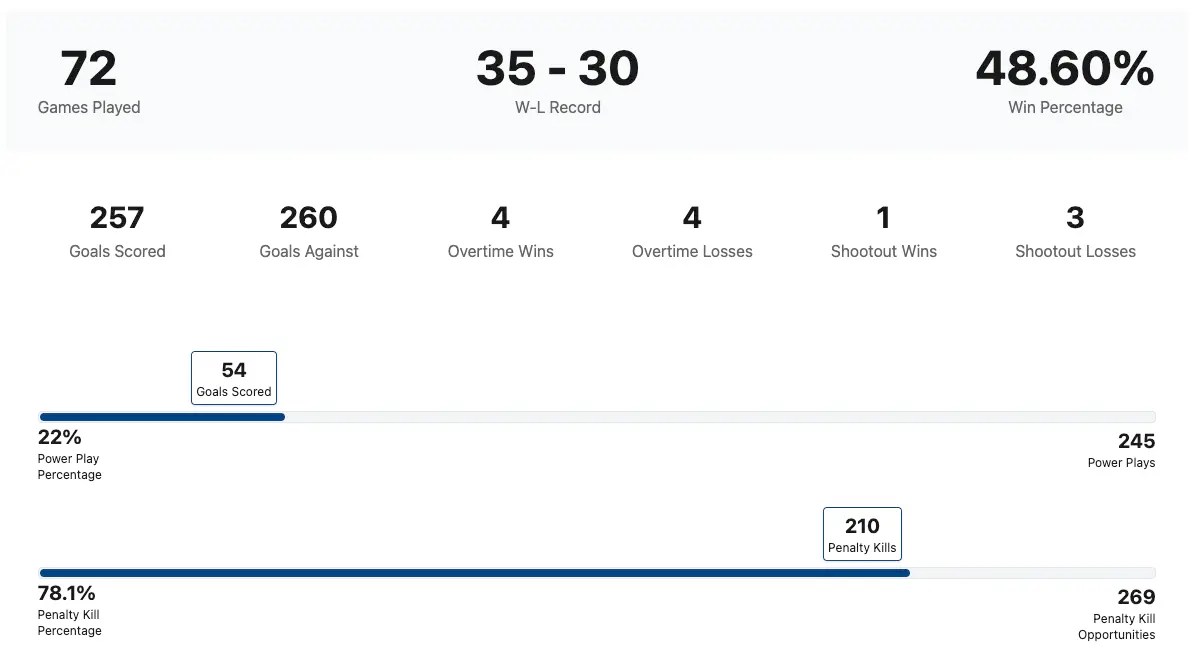
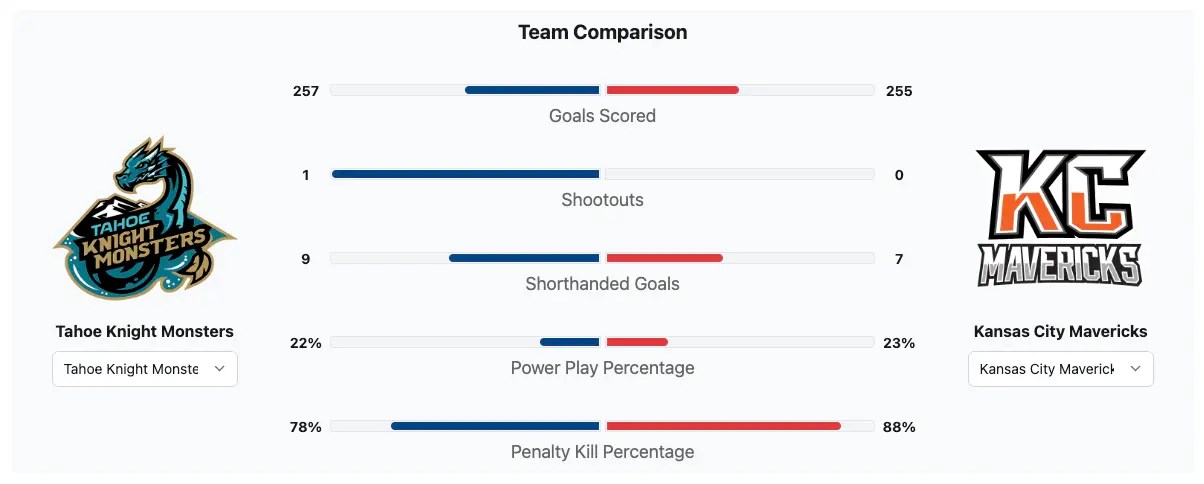
The Tahoe Knight Monsters wrapped up the regular season with a 35-30-7 record, earning 77 points across 72 games and finishing with a 48.6% win rate. That performance placed them 18th overall in the league, 9th in the Western Conference, and fourth in the Mountain Division—solid positioning that reflected a team capable of competing, but one that often found itself on the wrong side of tight, high-scoring games. Offensively, Tahoe showed they could produce at a high level throughout the season, scoring 257 goals, which ranked as the second most in the entire league. That kind of production highlighted their ability to generate offense in waves and stay dangerous in nearly every matchup. However, defensive consistency told a different story. The Knight Monsters allowed 260 goals, the third most in the league, resulting in a narrow but impactful -3 goal differential. That slight negative margin underscores a season where offensive firepower was often offset by defensive breakdowns and inconsistency in their own zone. Special teams played a significant role in shaping Tahoe’s identity over the course of the year. On the power play, the team scored 54 goals on 245 opportunities, finishing at a 22% conversion rate, a respectable figure that kept them competitive in many games. Their penalty kill also showed effectiveness, successfully stopping 210 of 269 opponent power plays for a 78.1% kill rate. While not elite, it was strong enough to keep them within striking distance in most contests. One of the more defining characteristics of Tahoe’s season, however, was their physical and penalty-heavy style of play. The team accumulated 1,057 penalty minutes, ranking fourth most in the league. That level of penalties reflects a highly aggressive approach that often put them in difficult situations, forcing the penalty kill into heavy usage and occasionally shifting momentum to opponents. Taken together, the Knight Monsters’ season was defined by high offensive output, defensive vulnerability, and a consistently physical identity that both helped and hurt them throughout their 72-game campaign.

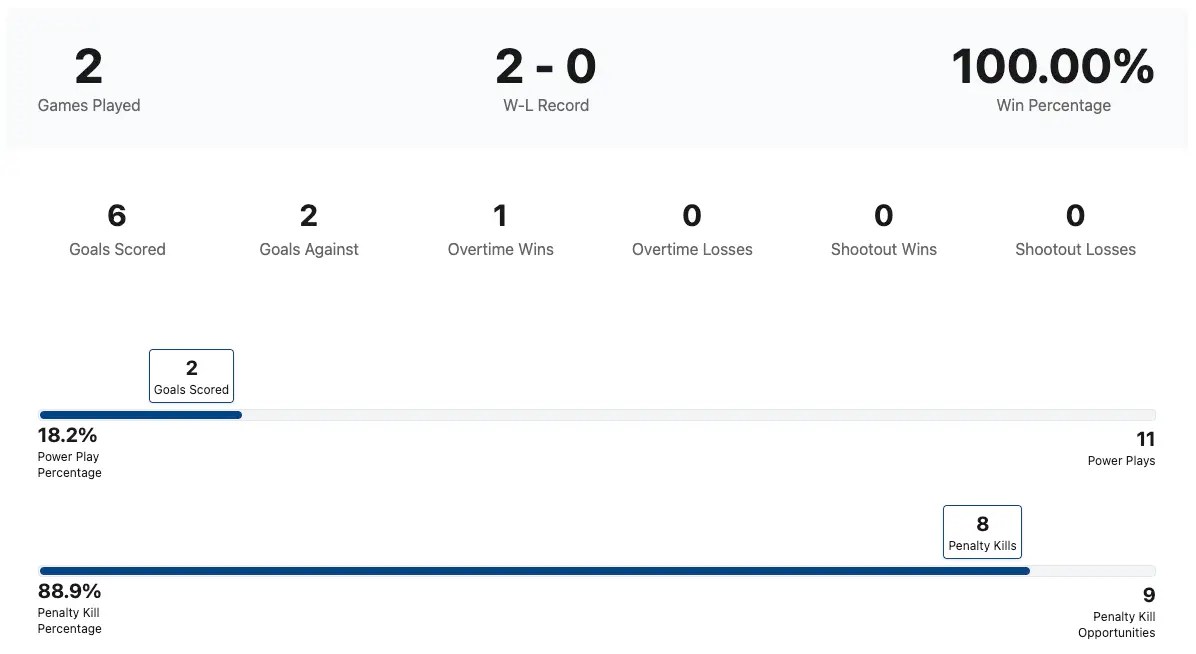
The Kansas City Mavericks have opened the 2026 Kelly Cup Playoffs in dominant fashion, delivering a perfect start through their first two games. Kansas City is currently 2-0 in the postseason, maintaining a 100.00% win percentage and establishing early control of their Mountain Division Semifinals matchup. With no losses so far, they have positioned themselves firmly in command of the series and continue to build momentum at exactly the right time of year. Offensively, the Mavericks have produced efficiently and effectively, scoring six total goals across their first two playoff games. That averages out to three goals per game, a steady output that has been more than enough to separate them from their opponent. Defensively, Kansas City has been just as impressive, allowing only two goals total, or just one goal against per game. That combination of strong scoring and disciplined defense has resulted in a +4 goal differential, a clear indicator of their early postseason dominance and overall balance on both ends of the ice. Special teams have also played a meaningful role in their success. The Mavericks are 2-for-11 on the power play, converting at an 18.2% rate. While there is still room for improvement in that area, they have been able to capitalize enough to maintain pressure in key moments. On the penalty kill, Kansas City has been highly effective, successfully killing off 8 of 9 opposing power plays for an 88.9% success rate. That level of discipline and structure has limited opponent momentum and reinforced their ability to control games even when shorthanded. Physically, the Mavericks have also been heavily involved, recording 58 penalty minutes so far in the playoffs. While that number reflects a chippy and competitive style of play typical of postseason hockey, they have largely managed to avoid letting penalties derail their rhythm. Overall, Kansas City’s early playoff performance has been defined by balance, efficiency, and control, scoring when needed, defending with consistency, and showing why they entered the postseason as one of the league’s most complete teams.
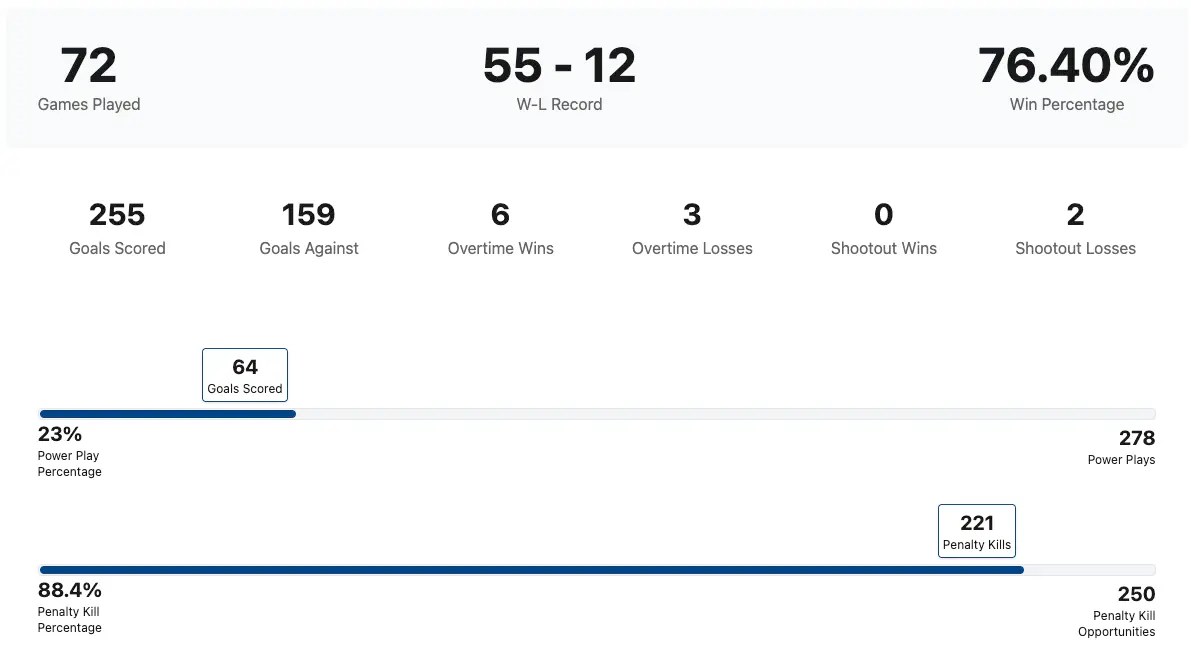
The Kansas City Mavericks put together one of the most dominant regular seasons in the 2026 campaign, finishing with a 55-12-5 record and 115 points over 72 games. That level of consistency placed them first overall in the league, first in the Western Conference, and first in the Mountain Division, establishing them as the clear benchmark for success throughout the ECHL. Their 76.40% win percentage reflects just how consistently they controlled games from start to finish, rarely allowing opponents to gain sustained momentum across the season. Offensively, Kansas City was among the league’s elite, scoring 255 goals, which ranked third most in the entire ECHL. That production showcased a deep, balanced attack capable of generating offense in multiple ways rather than relying on a single line or scoring threat. Even more impressive was their defensive structure, as they allowed just 159 goals all season, the second fewest in the league. That combination of strong scoring and elite defensive responsibility resulted in a staggering +96 goal differential, a number that underscores just how dominant they were on both sides of the puck. Special teams were another major strength for the Mavericks throughout the year. On the power play, they converted 64 goals on 278 opportunities, finishing at a 23% success rate, a mark that kept them consistently dangerous when given extra-man advantages. Their penalty kill was equally impressive, shutting down 221 of 250 opponent power plays for an 88.4% success rate. That level of efficiency made them extremely difficult to break down, even in situations where discipline slipped or momentum shifted against them Discipline overall was also a notable part of their identity. The Mavericks accumulated 854 penalty minutes, ranking 14th fewest in the league, which reflects a disciplined and controlled style of play compared to many of their peers. They managed to stay competitive without relying on overly aggressive or undisciplined tactics, instead leaning on structure, speed, and execution. Taken together, Kansas City’s regular season profile paints the picture of a complete team—dominant at even strength, efficient on special teams, and disciplined enough to maintain control over games night after night.

Through the first two games of the 2026 Kelly Cup Playoffs series between the Kansas City Mavericks and the Tahoe Knight Monsters, the early gap between the two teams has been clear in both results and execution. Kansas City has come away with two wins in as many games, while Tahoe has dropped both contests, creating an immediate 2-0 series advantage for the Mavericks and putting them firmly in control of the matchup. That advantage is reflected further in the goal differential, where Kansas City has outscored Tahoe by four goals so far in the series. In playoff hockey, where margins are often tight and momentum swings are critical, that four-goal edge represents more than just scoring; it highlights the Mavericks’ ability to capitalize on chances while limiting damage on the defensive end. Across both games, they have been more efficient in key moments, turning opportunities into results at a higher rate than their opponent. Special teams have also played a major role in separating the two sides. The Mavericks hold the advantage on both the power play and penalty kill, outperforming Tahoe in each category. That edge has translated directly into game control, allowing Kansas City to dictate tempo when given opportunities and consistently shut down opposing pressure when shorthanded. These situational advantages have been a key reason why the Mavericks have been able to build and maintain their series lead. One area where Tahoe does hold a statistical edge is discipline. The Knight Monsters have recorded 22 fewer penalty minutes than Kansas City through the first two games, indicating a slightly more controlled approach in terms of penalties taken. However, despite that advantage, it has not translated into wins or momentum, as the Mavericks have still managed to outperform them in special teams efficiency and overall scoring impact. Taken together, the early series numbers tell a clear story: Kansas City has been more effective in nearly every critical category that decides playoff games. From scoring and special teams to overall execution, the Mavericks have established control early, while Tahoe now faces the challenge of overcoming both the scoreboard and the underlying statistical trends if they hope to turn the series around.
Looking back at the 2026 regular season, the gap between the Kansas City Mavericks and the Tahoe Knight Monsters becomes even more pronounced when the numbers are placed side by side. Kansas City finished the year with 20 more wins than Tahoe, a difference that speaks to sustained dominance over a full 72-game schedule. On the opposite end of the standings, the Knight Monsters accumulated 18 more losses than the Mavericks, reinforcing the consistency gap between the division leaders and a mid-table contender trying to find stability throughout the year. Even in the finer margins, the contrast between the two teams remained evident. Tahoe recorded just one more overtime loss than Kansas City, showing that both teams found themselves in a few tight, extra-frame situations, but only one consistently turned those close games into wins. Interestingly, the Knight Monsters actually scored two more goals than the Mavericks over the course of the regular season, showing that offensive production was not necessarily their biggest issue. However, that slight scoring edge was completely overshadowed by defensive struggles, as Tahoe allowed 101 more goals than Kansas City, a massive difference that ultimately defined the separation between the two clubs. Special teams and situational play further highlight the divide. The Knight Monsters did manage to edge Kansas City by two shorthanded goals, showing occasional flashes of opportunistic play even while down a man. However, those moments were rare compared to the broader trends. The Mavericks held the advantage in both power play and penalty kill efficiency, continuing to demonstrate a more complete and structured approach in critical game situations where special teams often decide outcomes. Discipline is another area where the contrast becomes impossible to ignore. Tahoe accumulated 200 more penalty minutes than Kansas City over the course of the season, a significant difference that points to a far more chaotic and penalty-heavy style of play. That level of undisciplined hockey not only placed extra strain on their penalty kill but also gave opponents more opportunities to dictate momentum and control games. Taken together, the season-long comparison paints a clear picture: while Tahoe showed flashes of offensive capability, Kansas City’s superiority in wins, defensive structure, special teams execution, and discipline ultimately defined the gap between a league-leading powerhouse and a team still searching for consistency.

The Tahoe Knight Monsters showed noticeable resilience in their most recent outing, pushing the game to the limit but ultimately coming up just short against the Kansas City Mavericks. Even in defeat, there were clear positives to take away from the performance. Compared to Game One of the series, Tahoe responded with more urgency, more structure, and a more competitive level, showing that they are not backing down despite the early series deficit. That kind of response is important in a playoff environment, where adjustments and bounce-back efforts often define whether a series stays competitive or slips away entirely. Still, the broader context continues to work against Tahoe. The Knight Monsters have not won a playoff game since last season, and they have yet to record a postseason victory against Kansas City. That history adds weight to every shift in this series, and right now, it’s Kansas City that continues to hold the advantage in both execution and results. With momentum and confidence leaning heavily toward the Mavericks, Tahoe finds itself needing to overcome not just the opponent in front of them, but also a growing pattern of postseason struggles. At this point, everything is stacking up against the Knight Monsters, which makes the upcoming stretch even more critical. A change of scenery as the series shifts back home could provide a much-needed spark, and the energy of the home crowd at the Tahoe Blue Event Center may be exactly the boost they need to reset the tone of the series. Home ice often becomes a turning point in playoff hockey, and for Tahoe, it now represents more than just an advantage; it represents opportunity and survival. However, opportunity alone will not be enough. Tahoe needs to find another level in their game, whether that comes through sharper execution, more consistent scoring, tighter defensive structure, or simply more urgency in critical moments. Without that next gear, their playoff run risks ending far sooner than they hoped. Game Three now becomes a defining moment in the series, carrying significant weight for both teams. If Tahoe loses, they fall into a daunting 0–3 deficit, with the Mavericks then holding up to four chances to close out the series. That scenario would place immense pressure on the Knight Monsters, leaving very little margin for error and forcing them into a near-perfect run just to extend their season. On the other hand, if Tahoe can secure a win in Game Three, the entire series shifts. They would force a Game Five and suddenly gain breathing room, reducing the immediate pressure heading into Game Four and giving themselves a realistic path back into contention. In that sense, Game Three is not just another contest—it is a series-defining crossroads that will likely determine whether Tahoe’s playoff journey continues or begins slipping away.
Keys to the game:
- Start Fast at Home Ice – Tahoe needs an immediate energy boost early in the game. Falling behind early has been a problem in the series, and getting the first goal could completely shift momentum at the Tahoe Blue Event Center.
- Fix Defensive Breakdowns – The Knight Monsters have allowed too many high-danger chances and goals in the series. Tightening coverage in front of the net and limiting odd-man rushes will be critical against a disciplined Kansas City attack.
- Discipline Without Losing Edge – Tahoe has racked up significant penalty minutes, which has fueled the Mavericks’ special teams. They need to stay physical but avoid unnecessary penalties that swing momentum.
- Power Play Execution Must Improve – Converting on the man advantage is essential. Tahoe’s power play has had looks but lacks finishing—capitalizing on even one or two opportunities could change the entire game.
- Contain Kansas City’s Top Scoring Push – The Kansas City Mavericks average strong offensive output early in games. Tahoe must neutralize their top lines and prevent sustained zone pressure.
- Win the Special Teams Battle – Kansas City has held the edge in both power play and penalty kill efficiency. Tahoe needs a clean, effective special teams performance to even the playing field.
- Sustain Pressure Beyond One Shift – One of Tahoe’s biggest challenges has been inconsistency. They need extended offensive zone time and sustained pressure rather than short bursts.
- Goaltending Must Steal a Moment – With the series tight in moments but tilted in results, Tahoe’s goaltender may need to deliver a game-changing performance to keep them alive.
- Score First, Defend the Lead – When Tahoe has struggled most is playing from behind. Scoring first would allow them to dictate tempo and force Kansas City into chasing the game.
- Play Like It’s a Must-Win (Because It Is) – Down 0–2 in the series, this is effectively a must-win game. The urgency, effort level, and physical intensity need to reflect that reality from puck drop.




Leave a Reply