
The ECHL is seeing the introduction of two new teams next season. The Bloomington Bison and the Tahoe Knight Monsters. The addition of two new teams will bring the total number of teams up to thirty. That will be the most the ECHL has had since the 2003-04 season when they absorbed the WCHL. That means a realignment is inbound. There will likely not be a lot of changes to the current ECHL alignment. But there will be changes. I have some ideas on how the league could align for the 2024-25 season.
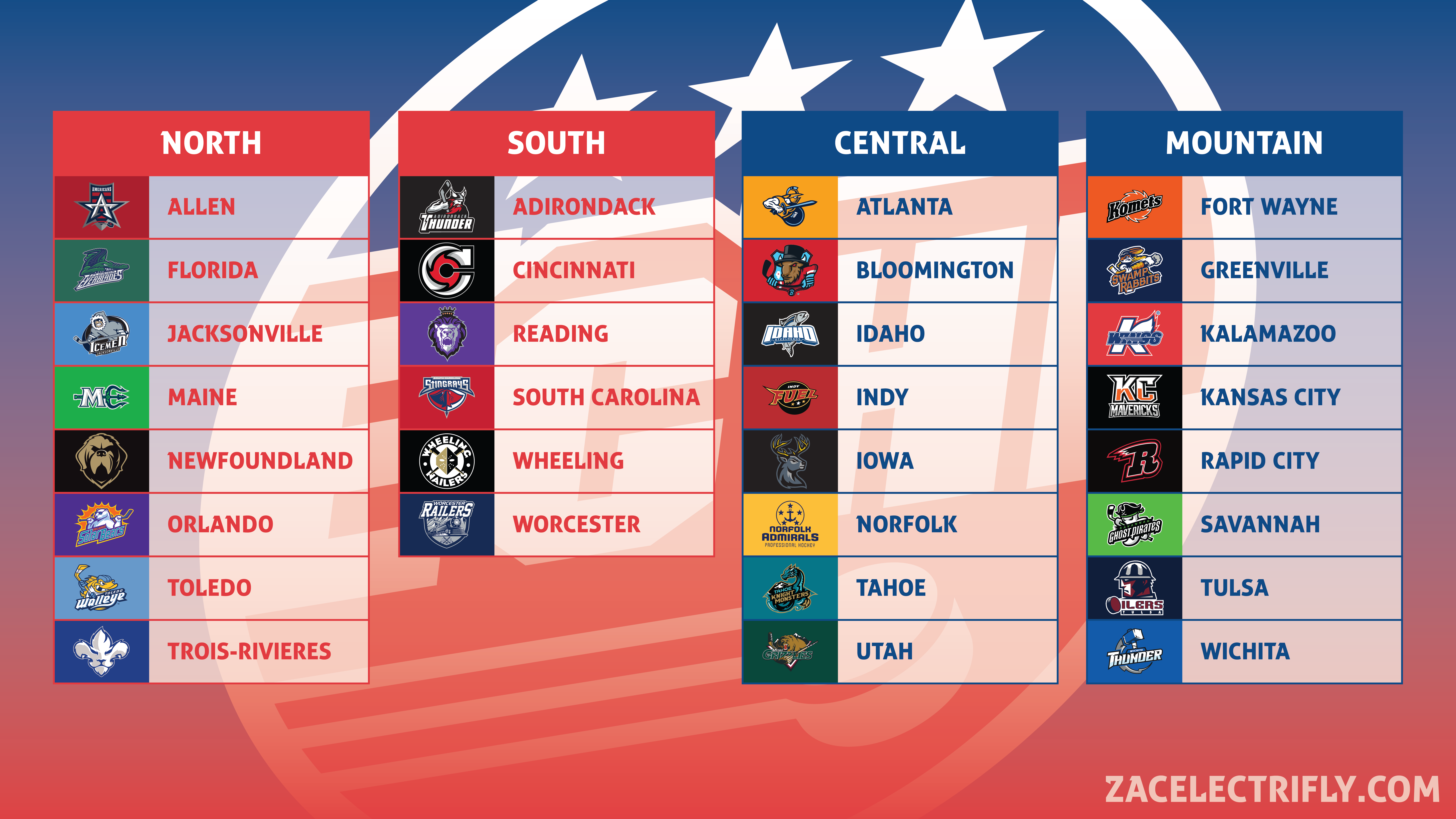

The first idea I had is to align the ECHL based on their NHL affiliates. The first problem with this alignment is that the NHL has thirty two teams while the ECHL only has thirty. This made the South Division of the ECHL have six teams while the other divisions all have eight teams. This leads to the Western Conference having sixteen teams while the Eastern Conference has fourteen teams. This would not be the first time the ECHL would have uneven divisions or conferences. The second problem with this alignment is geography. Finances in the ECHL are tighter than in the NHL or AHL. Geography plays a larger role in the ECHL than in the NHL or AHL. This system would have teams from the east coast and teams from the west coast in the same division. This system would cause travel costs to go up unnecessarily. An easy fix for that would be to just change the affiliations. Make the ECHL teams be affiliated with their nearest NHL team.
In this system the Eastern Conference would have a North and South Division. The North Division is modeled after the Atlantic Division of the NHL. The South Division is modeled after the Metropolitan Division of the NHL. The North Division would have eight teams. The Maine Mariners (Boston Bruins), the Jacksonville Icemen (Buffalo Sabers), the Toledo Walleye (Detroit Red Wings), the Florida Everblades (Florida Panthers), the Trois-Riveres Lions (Montreal Canadiens), the Allen Americans (Ottawa Senators), the Orlando Solar Bears (Tampa Bay Lightning), and the Newfoundland Growlers (Toronto Maple Leafs) would make up the North Division. The South Division would have six teams. The Adirondack Thunder (New Jersey Devils), the Worcester Railers (New York Islanders), the Cincinnati Cyclones (New York Rangers), the Reading Royals (Philadelphia Flyers), the Wheeling Nailers (Pittsburgh Penguins), and the South Carolina Stingrays (Washington Capitals) would make up the South Division.
The Western Conference would have a Central Division and a Mountain Division. Both divisions would have eight teams. The Central Division is modeled after the central division of the NHL. The Mountain Division is modeled after the Pacific Division of the NHL. The Tahoe Monster Knights (unaffiliated expansion), the Indy Fuel (Chicago Blackhawks), the Utah Grizzlies (Colorado Avalanche), the Idaho Steelheads (Dallas Stars), Iowa Heartlanders (Minnesota Wild), the Atlanta Gladiators (Nashville Predators), the Bloomington Bison (unaffiliated expansion), and the Norfolk Admirals (Winnipeg Jets) would make up the Central Division. I added the Tahoe Knight Monsters to the Central Division because they will likely be a Western Conference team. I added the Bloomington Bison to the Central Division because they will likely be affiliated with the St. Louis Blues who currently do not have an ECHL affiliate. The Tulsa Oilers (Anaheim Ducks), the Rapid City Rush (Calgary Flames), the Fort Wayne Komets (Edmonton Oilers), the Greenville Swamp Rabbits (LA Kings), the Wichita Thunder (San Jose Sharks), the Kansas City Mavericks (Seattle Kraken), the Kalamazoo Wings (Vancouver Canucks), and the Savannah Ghost Pirates (Vegas Golden Knights) make up the Mountain Division.
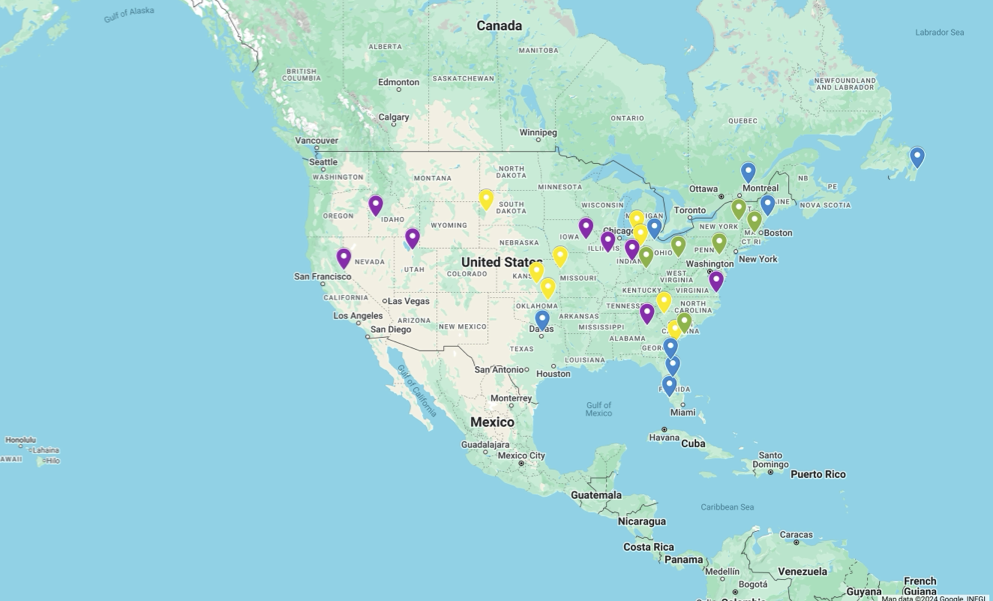
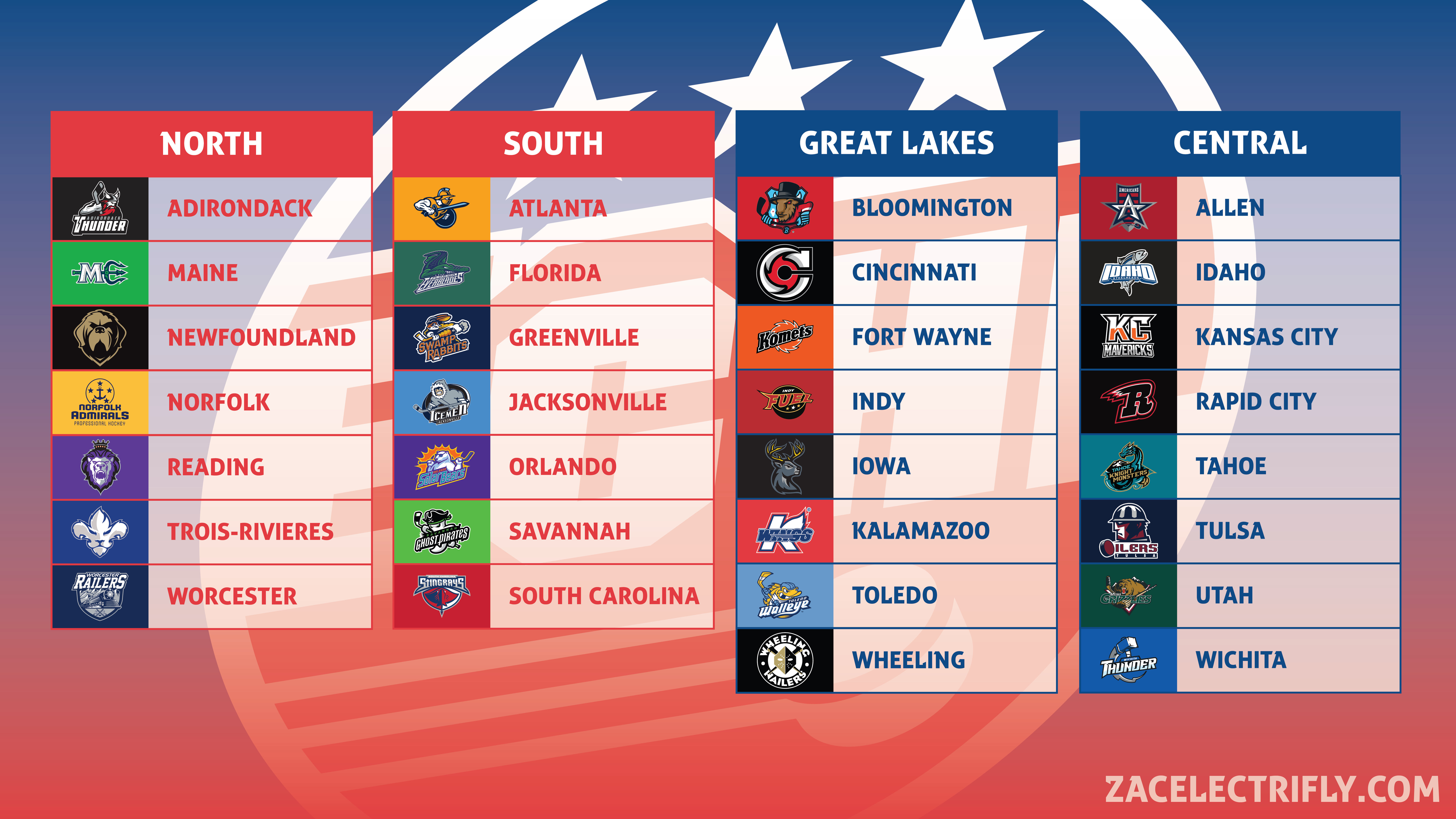

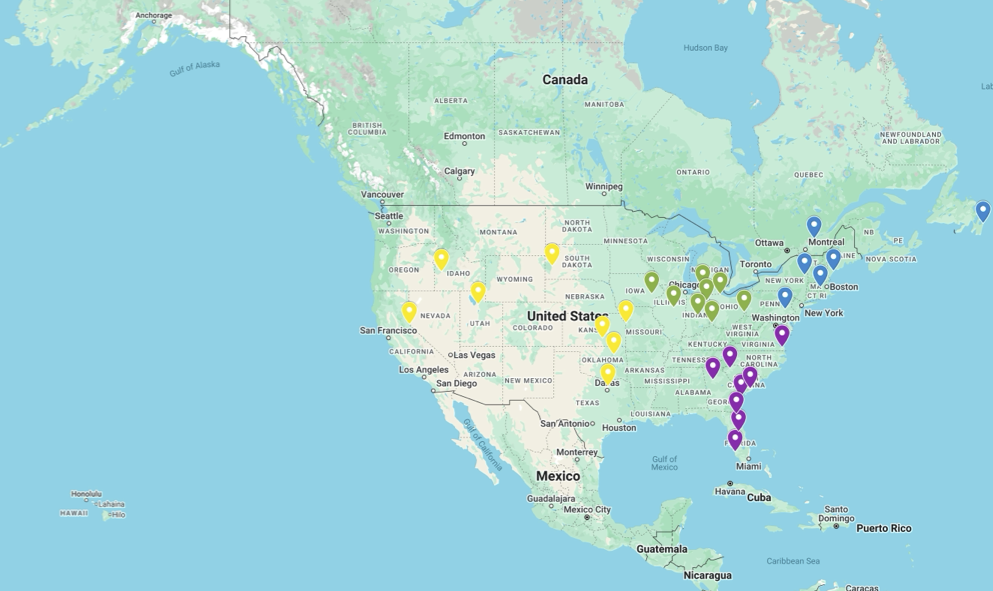
The second idea I had is to align the ECHL based on what teams are the closest to each other. The idea here was to cut down the travel costs as much as possible. A system based on proximity is likely what the ECHL will do. This system has two conferences and four divisions again. This system would have uneven divisions and conferences. The Eastern Conference would have fourteen teams in two divisions of seven. The Western Conference would have sixteen teams in two divisions of eight.
The Eastern Conference would have the North Division and the South Division. In the North Division would be the Adirondack Thunder, the Maine Mariners, the Newfoundland Growlers, the Norfolk Admirals, the Reading Royals, the Trois-Rivieres Lions, and the Worcester Railers. In the South Division would be the Atlanta Gladiators, the Florida Everblades, the Greenville Swamp Rabbits, the Jacksonville Icemen, the Orlando Solar Bears, the Savannah Ghost Pirates, and the South Carolina Stingrays.
The Western Conference would have the Great Lakes Division and the Central Division. In the Great Lakes Division would be Bloomington Bison, the Cincinnati Cyclones, the Fort Wayne Komets, the Indy Fuel, the Iowa Heartlanders, the Kalamazoo Wings, the Toledo Walleye, and the Wheeling Nailers. In the Central Division would be the Allen Americans, the Idaho Steelheads, the Kansas City Mavericks, the Rapid City Rush, the Tahoe Knight Monsters, the Tulsa Oilers, the Utah Grizzlies, and the Wichita Thunder.
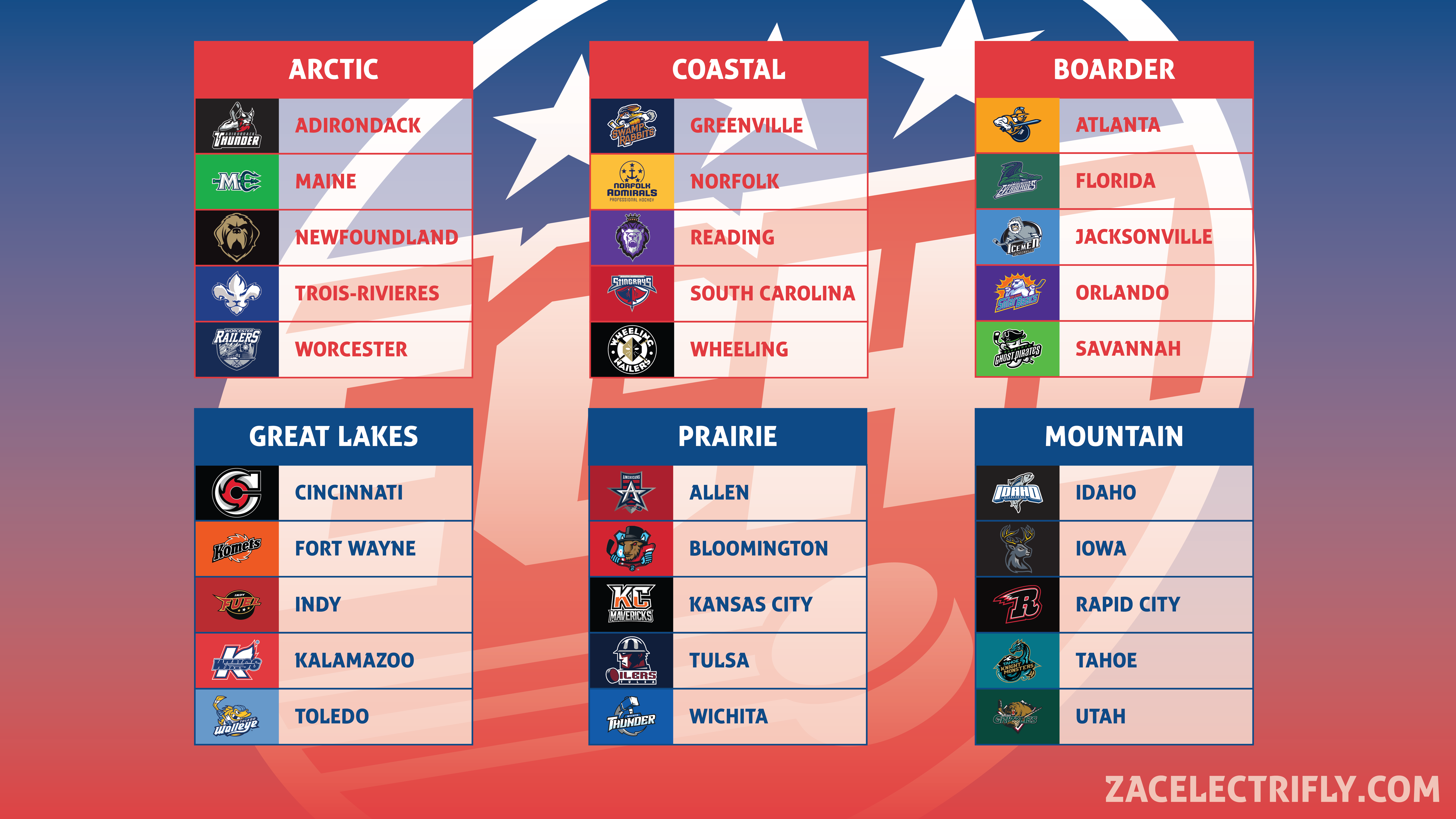

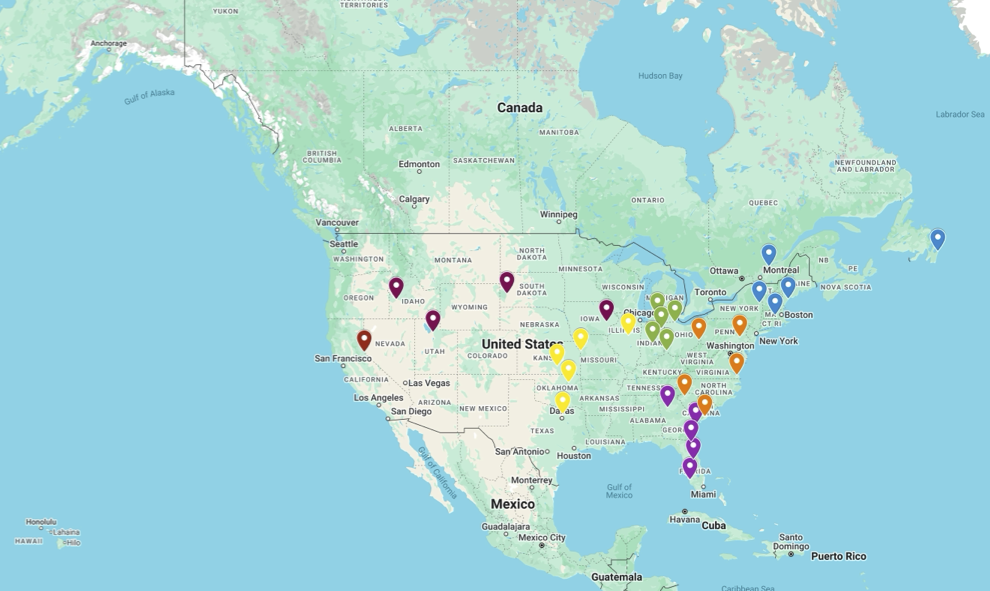
The third system I came up with is to align the ECHL into even divisions. For this system their would be two conferences made up of three divisions. Each division would have six teams. Again the teams are grouped based on proximity. I came up with this system while remembering that the NBA and MLB have six divisions. The benefits of this system would be cut down in travel costs and even opportunities for all teams.
In the Eastern Conference would be the Arctic Division, the Coastal Division, and the Boarder Division. The Arctic Division is named after the Arctic Circle that is partially in the United States and Canada. The Coastal Division is named after the East Coast in ECHL. I didn’t want to just name it the Atlantic division like in the NHL. The Boarder Division is named after the Georgia Florida boarder. All of the teams in that division are in Georgia or Florida. In the Arctic Division would be the Adirondack Thunder, the Maine Mariners, the Newfoundland Growlers, the Trois-Rivieres Lions, and the Worcester Railers. In the Coastal Division would be the Greenville Swamp Rabbits, the Norfolk Admirals, the Reading Royals, the South Carolina Stingrays, and the Wheeling Nailers. In the Boarder Division would be the Atlanta Gladiators, The Florida Everblades, the Jacksonville Icemen, the Orlando Solar Bears, and the Savannah Ghost Pirates.
In the Western Conference is the Great Lakes Division, Prairie Division, and the Mountain Division. The Great Lakes Division is named that way because all of the teams in that division are in states that boarder one of the great lakes. The Prairie Division is named after the prairie region of North America which all of the teams in that division are in. The Mountain Division is named after the Rocky Mountains and Sierra Nevada Mountains which most of the teams in that division are close too. In the Great Lakes Division would be the Cincinnati Cyclones, the Fort Wayne Comets, the Indy Fuel, the Kalamazoo Wings, and the Toledo Walleye. In the Prairie Division would be the Allen Americans, the Bloomington Bison, the Kansas City Mavericks, the Tulsa Oilers and the Wichita Thunder. In the Mountain Division would be the Idaho Steelheads, the Iowa Heartlanders, the Rapid City Rush, the Tahoe Knight Monsters, and the Utah Grizzlies. The Iowa Heartlanders are in the Mountain Division to keep the most of the former Central Hockey League cities in the same division. The Iowa Heartlanders, the Kansas City Mavericks, and Bloomington Bison are all basically the same distance from the Allen Americans.


Under any of these realignment systems the ECHL would still play seventy two games during the regular season. The ECHL should Limit teams to only playing games within their conference except in the Kelly Cup Finals. Like in the MLB. My first idea for the playoffs would be to match the NHL. Sixteen teams. The top three teams in each division would qualify plus the next two highest seeds. Each round would be a best of seven series. The matchups would be based on conference standings. The ECHL currently uses a modified version of that playoff format that they will likely stick with. Sixteen teams. four teams per division. Each round is a best of seven series. The matchups are based on the divisional standings.
My second idea for the playoffs would be based on closest matchups. Twenty four teams would make the playoffs. Playoff qualification would be based on overall standings if the league has four divisions and based on divisional standings if the league has six divisions. The top eight teams would get a bye into the second round. The first round would be a single game elimination wildcard round with sixteen teams. The second round would be a best of three game series. The semifinals would be a best of five game series. The Kelly Cup Finals would be a best of seven game series. Matchups would be based on playing the closest team.
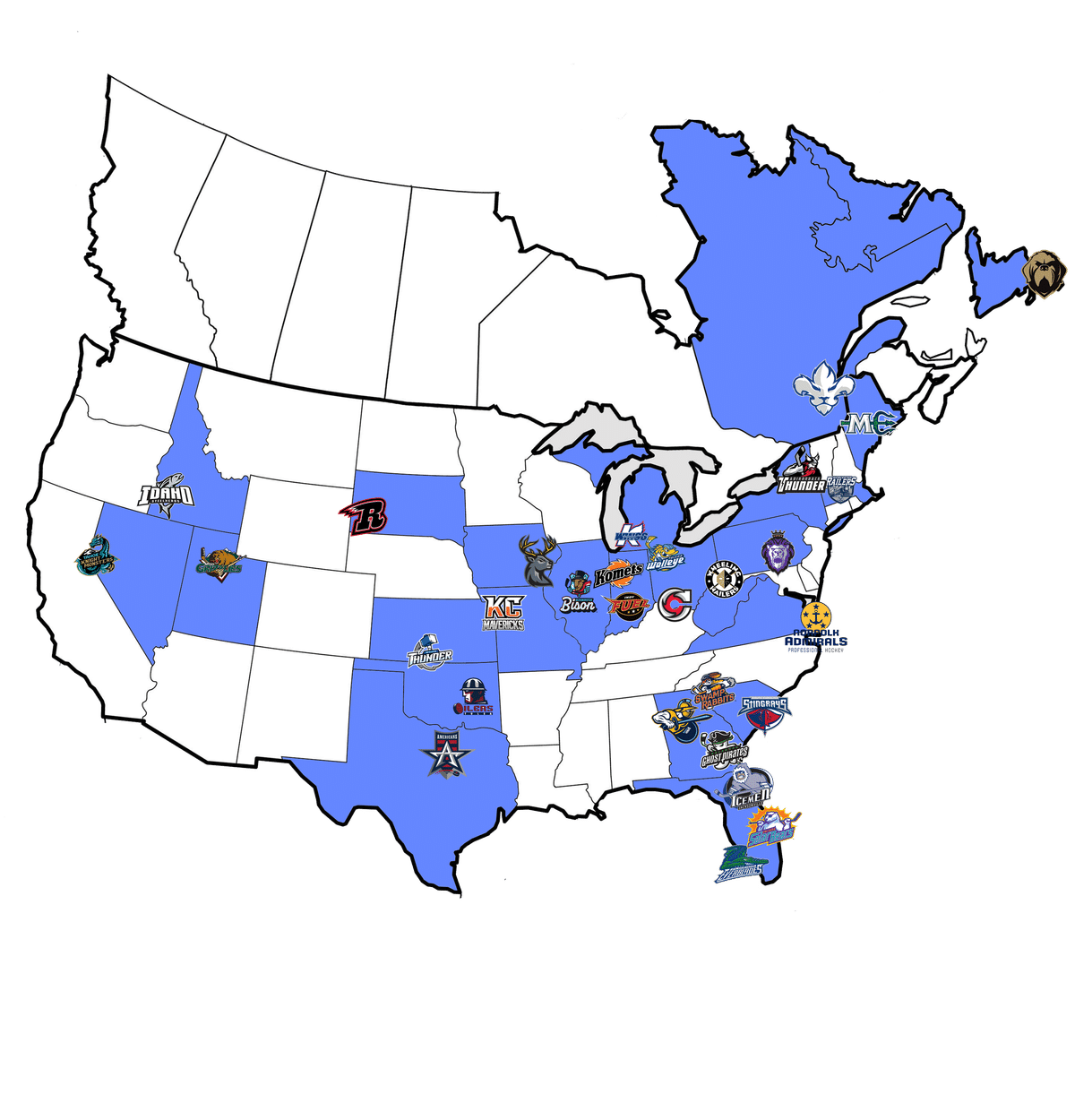


All of this is based on a thirty team league. The Newfoundland Growlers just folded. I started working on this well before any of that new came out. In the alignment system based on affiliations, the Eastern Conference would lose a team. All that would do is make it easier for teams in the Eastern Conference to qualify for the playoffs. It’s the same thing for my alignment system based on team proximity. In my system with six team conferences the Arctic Division loses one team. If the playoffs were based on divisional standings then all of the Arctic Division teams would just qualify for the playoffs. I think it could be interesting if the Eastern Conference teams qualified for the playoffs based on conference standings while the Western Conference teams qualified for the playoffs based on divisional standings. with that in the Eastern Conference two of the teams that came in last in their division would not make the playoffs while one of the teams who came in last in their division would make the playoffs. In the Western Conference the last place team in each division would not make the playoffs.

 Zac Electrifly
Leave a reply to Meet The New Affiliate Of The Bloomington Bison: A Game-Changer For The Team – Zac Electrifly Cancel reply