

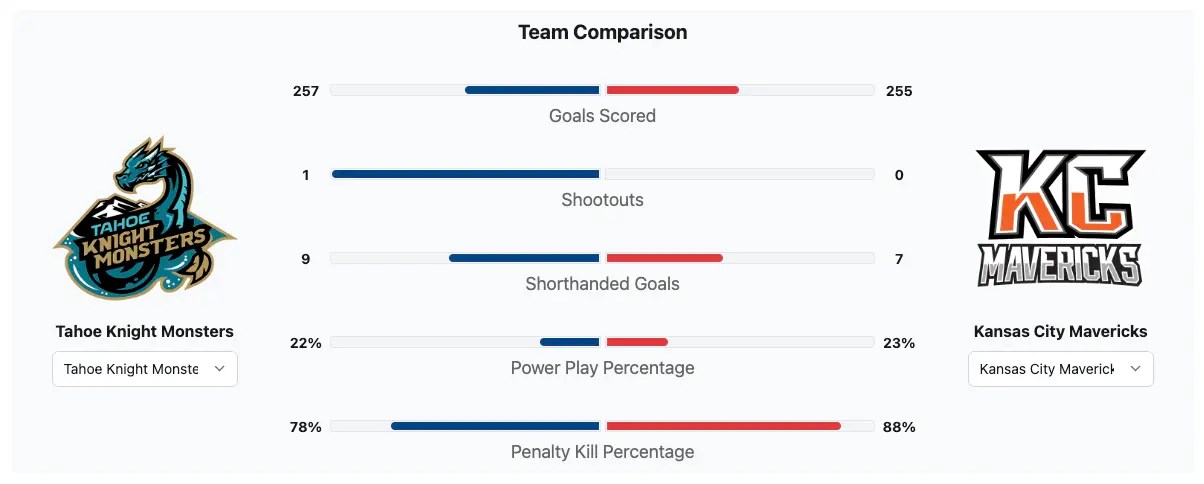
Game two of the 2026 Kelly Cup Playoffs brought the Tahoe Knight Monsters back into action on Saturday night as they faced off against the Kansas City Mavericks at Cable Dahmer Arena. With the stakes rising early in the series, Tahoe entered the game looking to avoid falling into a deeper hole. The Knight Monsters came into the postseason as the fourth-place team in the Mountain Division, finishing the regular season with a 35-30-7 record. As the ECHL affiliate of the Vegas Golden Knights, Tahoe has been building its identity as a competitive but still-developing squad, one capable of challenging stronger opponents but needing consistency to break through in high-pressure moments. On the other side, the Mavericks entered the playoffs as the clear top team in the division, posting a dominant 55-12-6 record during the regular season. Backed by their affiliation with the Seattle Kraken, Kansas City has established itself as one of the most complete teams in the league, combining offensive firepower with structure and depth.
This game marked the second playoff appearance of the series for both teams, but the momentum heading into the night clearly favored Kansas City. The Mavericks had already taken game one, giving them a 1-0 series lead and putting immediate pressure on Tahoe to respond. The Knight Monsters entered the game with a 0-1-0 playoff record, while Kansas City sat at 1-0-0, riding the confidence of their opening win. With the series still early but already leaning in Kansas City’s favor, game two represented a critical turning point. For the Mavericks, it was an opportunity to tighten their grip on the series and defend home ice. For the Knight Monsters, it was a chance to even things up and prove they could hang with the best team in the division when it mattered most.

Regular season:
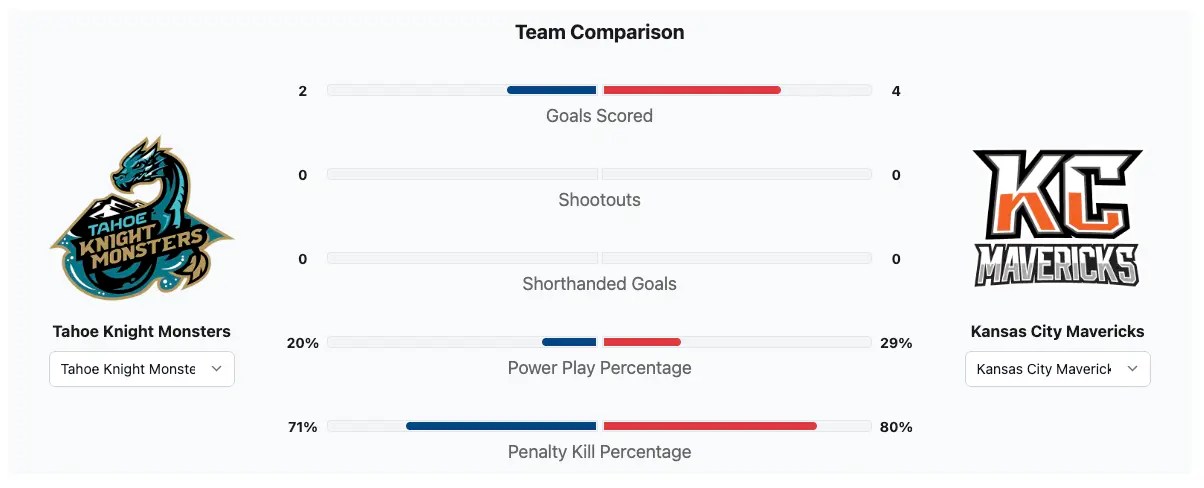
Playoffs:

Game two also brought some notable lineup decisions and key storylines between the pipes, starting with Tahoe’s choice in net. The Knight Monsters turned to Jordan Papirny, giving him the start in what was not only a significant moment for the team but a milestone in his career. This marked Papirny’s 38th appearance for Tahoe during the season, but more importantly, it was his first playoff game of the year, and his first professional playoff start overall. Even more notable, it was his first time appearing in a playoff game since the 2016-17 season, making this a long-awaited return to postseason action. That kind of gap adds an extra layer of intrigue, as Papirny stepped into a high-pressure situation against one of the league’s top teams, tasked with helping Tahoe even the series. Tahoe also made a roster move up front ahead of the game, activating forward Jake Durflinger to bolster their lineup. In a corresponding move, forward Jordan Gustafson was placed on reserve. These adjustments suggest the Knight Monsters were looking to shake things up offensively and potentially inject some fresh energy into their forward group as they tried to respond after dropping game one.
On the other side, the Kansas City Mavericks went with Dylan Wells between the pipes. Wells made his 35th ECHL appearance of the season and his 13th game specifically with Kansas City, highlighting his role as a key piece of their goaltending rotation since joining the team. Like Papirny, this was Wells’ first game of the playoffs, putting both netminders in a position to set the tone early in the series. Given Kansas City’s strong regular season and game one victory, Wells entered this matchup with the added benefit of team momentum in front of him. Kansas City also made several roster moves prior to puck drop. The Mavericks placed forwards Jackson Jutting and Luke Loheit on reserve, while activating forward Colby MacArthur. These changes reflect a team fine-tuning its lineup despite already holding the series lead, a sign of the depth and flexibility that helped them finish first in the division. As both teams adjusted their rosters and turned to fresh faces in key roles, game two had all the makings of a pivotal battle shaped not just by performance but by strategic decisions behind the scenes.
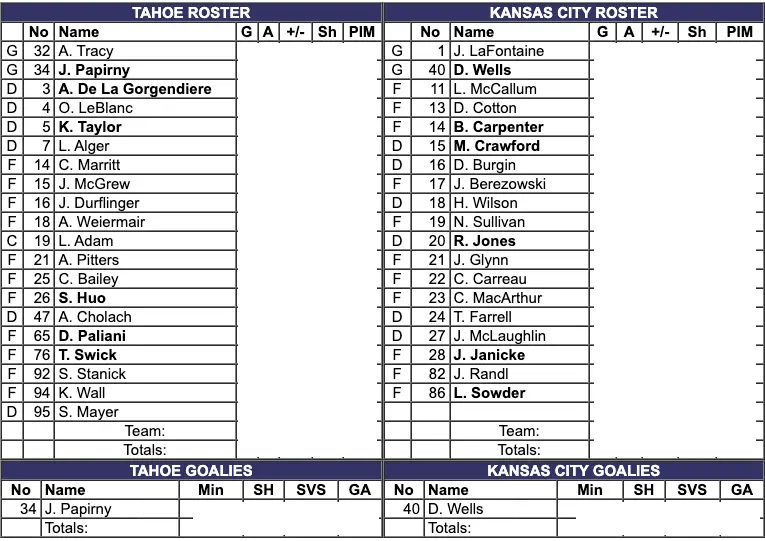

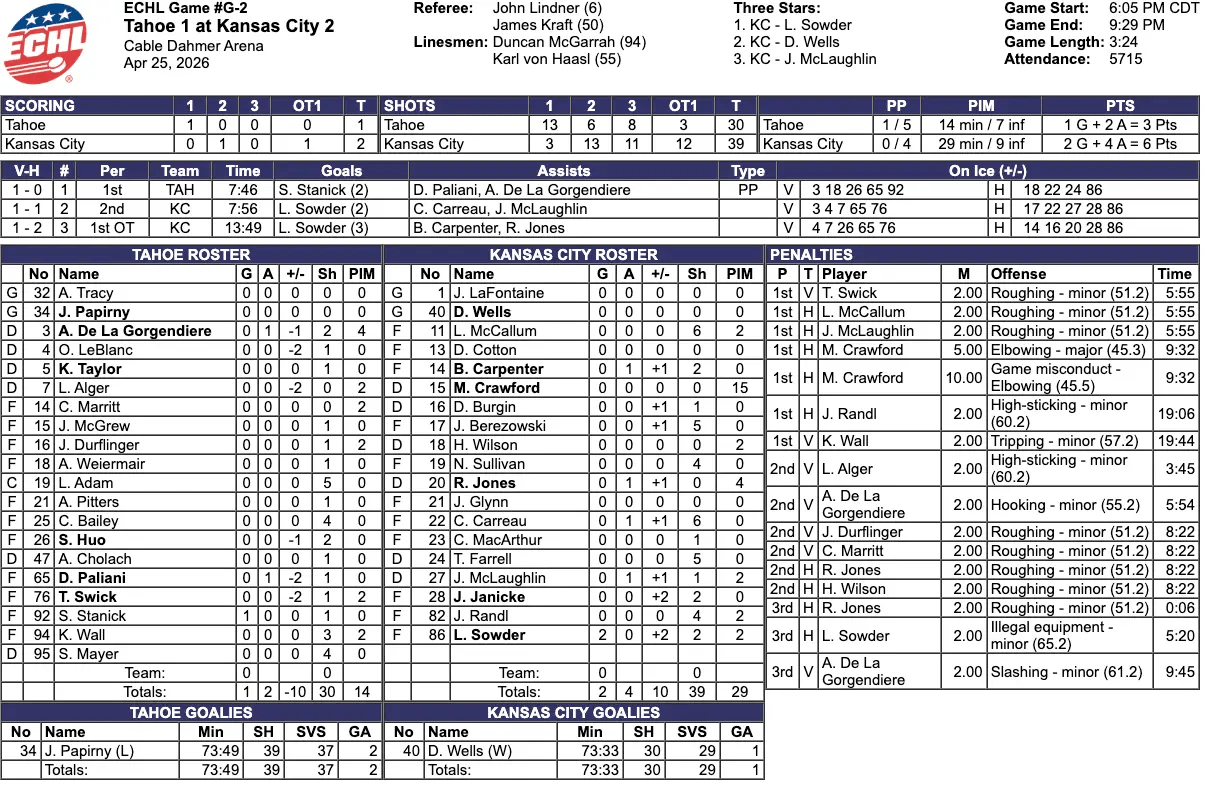
The opening period of game two quickly set a physical and intense tone, with both teams showing early that this would not be a quiet night. Just five minutes into the first period, tensions boiled over as multiple players were sent to the penalty box at the same time. Landon McCallum and Jake McLaughlin of the Kansas City Mavericks were both assessed roughing penalties, while Tahoe’s Trent Swick was also called for roughing on the same sequence. The coincidental penalties reflected the chippy nature of the game early on, with neither side willing to give an inch in what was already shaping up to be a hard-fought playoff battle. Tahoe took advantage of the situation shortly after, capitalizing on a power play opportunity to strike first. The Knight Monsters found the back of the net to score the game’s opening goal, marking not only their first goal of the night but also their first lead of the entire series. Sloan Stanick got the goal for Tahoe and was assisted by Devon Paliani and Aidan De La Gorgendiere. That moment carried extra significance, as Tahoe had been chasing the game in the series opener and was now able to flip the script, at least temporarily, against the top-seeded Mavericks.
Midway through the period, the physicality escalated even further. Around the nine-minute mark, Kansas City’s Marcus Crawford was handed a major penalty for elbowing, along with a 10-minute game misconduct. This was a pivotal moment in the period, as it not only put the Mavericks shorthanded for an extended stretch but also removed a player from their lineup, forcing them to adjust on the fly. Major penalties in playoff hockey can often swing momentum heavily, and this sequence gave Tahoe another opportunity to build on their early lead. As the first period wound down, the parade to the penalty box continued. With under a minute remaining, Kansas City’s Jack Randl was called for high-sticking, adding yet another power play chance for Tahoe. However, the Knight Monsters were unable to fully capitalize, as Kevin Wall was called for tripping while on the power play, neutralizing the advantage and preventing Tahoe from extending their lead further before intermission. Despite the chaos and constant special teams play, the Knight Monsters managed to come out of the opening period with a 1-0 lead. It was a strong start for Tahoe, fueled by timely scoring and the ability to take advantage of Kansas City’s penalties, while also surviving the physical, penalty-heavy pace that defined the first 20 minutes.

The second period saw momentum begin to shift, as discipline started to slip for Tahoe and Kansas City took full advantage. Just three minutes into the period, Linden Alger of the Knight Monsters was called for high-sticking, putting Tahoe on the penalty kill early. Not long after, at the five-minute mark, Aiden De La Gorgendiere was whistled for hooking, giving the Mavericks another opportunity with the man advantage. While Tahoe managed to get through the bulk of that pressure, it didn’t take long for Kansas City to capitalize once play returned to even strength. Moments after the power play expired, the Mavericks broke through to tie the game at 1-1. Lucas Sowder found the back of the net for Kansas City, finishing off a sequence that had been building during their sustained pressure. The goal was assisted by Casey Carreau and Jake McLaughlin, both of whom played key roles in setting up the scoring chance. It was a crucial equalizer for the Mavericks, erasing Tahoe’s early lead and swinging momentum firmly in their direction.
As the period continued, the physical edge from the first period carried over and once again turned into penalties. Around the eight-minute mark, a scrum resulted in multiple roughing calls on both sides. Tahoe’s Jake Durflinger and Connor Marritt were both penalized, while Kansas City’s Hudson Wilson and Ryan Jones were also sent off for roughing. The sequence highlighted just how heated the matchup had become, with players on both teams engaging after the whistle and refusing to back down. Despite the back-and-forth nature of the period and the continued physical play, neither team was able to find another breakthrough. The Mavericks’ goal stood as the lone tally of the second period, and by the time the horn sounded, the game was deadlocked at 1-1. With everything still to play for, the stage was set for a decisive third period in a tightly contested playoff battle.

The third period of Game 2 between the Tahoe Knight Monsters and the Kansas City Mavericks opened with immediate intensity, as discipline quickly became an issue on both sides. Just six seconds into the period, Ryan Jones of the Mavericks was assessed a roughing penalty, setting the tone for a tense and physical final frame. Kansas City’s penalty trouble continued midway through the period when Lucas Sowder was called for illegal equipment just five minutes in, forcing the Mavericks to once again adjust while trying to protect the tie. Tahoe also found themselves in the penalty spotlight later in the period, as Aiden De La Gorgendiere was sent to the box for slashing nine minutes into the third. Despite the penalties on both sides and the increased physicality, neither team was able to break through and capitalize on their chances. The defensive structure and goaltending held firm as the clock wound down. With no team able to find the go-ahead goal, the deadlock that had carried over from the second period remained intact. The game was still tied 1-1 at the end of regulation, reflecting just how evenly matched the two teams had been through three hard-fought periods. As a result, the contest would need extra time to determine a winner, pushing both the Tahoe Knight Monsters and Kansas City Mavericks into overtime under playoff pressure.

With the game hanging in the balance deep into overtime, the Kansas City Mavericks found their breakthrough. With just under seven minutes remaining in the first overtime period, Lucas Sowder delivered the decisive moment, scoring the game-winning goal to seal a dramatic 2-1 victory. The goal came at a critical time, as both teams had been locked in a tight, defensive battle since regulation, with very few clean scoring chances separating them. Sowder’s overtime winner was set up by strong puck movement and awareness from his teammates, with assists credited to Bobo Carpenter and Ryan Jones. Their ability to create space and generate a quality look under playoff pressure proved to be the difference in a game where every mistake was magnified and every shift carried momentum-changing potential. The goal not only ended the game but also shifted the tone of the series in a significant way. With the victory, the Kansas City Mavericks secured a 2-0 lead in the series, putting them firmly in control as the matchup shifts forward. For Tahoe, the loss is a tough one, especially given how closely contested the game was through regulation and into overtime, but the series now moves with Kansas City holding a strong early advantage.

Game 2 between the Tahoe Knight Monsters and the Kansas City Mavericks followed a familiar playoff script of momentum swings, physical play, and ultimately a razor-thin finish decided in overtime. Tahoe set the tone early by striking first, grabbing the opening goal, and putting Kansas City in chase mode right away. However, the Mavericks responded in the second period, tying the game and shifting the energy back to even footing heading into the later stages of regulation. From there, the matchup turned into a grind. Both teams battled through a heavily contested third period and eventually pushed through seven intense minutes of overtime. Physicality played a major role throughout the night, with a steady flow of penalties disrupting rhythm on both sides. Despite that, neither team was willing to back down, and the effort level stayed high from start to finish. In the end, Kansas City found the decisive moment and came out on top, continuing their strong playoff push. For Tahoe, this game was a clear step forward in response to their game one loss. Unlike the opening matchup, the Knight Monsters looked far more structured and dangerous in game two. They generated momentum, forced Kansas City into uncomfortable stretches, and at moments had the Mavericks on their heels. The effort and competitive level were noticeably elevated, and they appeared to rediscover a rhythm that had been missing previously. Still, despite putting themselves in a position to win, Tahoe was unable to deliver the final finishing touch needed to break through and secure the victory. The result also highlights a growing storyline for Tahoe: they have still not won a game in Kansas City, and their playoff struggles in that building continue. Adding to the challenge, the Knight Monsters have not recorded a playoff win since Friday, April 25th, 2025, a drought they are clearly still trying to break as the stakes continue to rise.
Kansas City, meanwhile, has put itself firmly in control of the series. After taking game one by a score of 4-1, the Mavericks followed it up with a 2-1 overtime win in game two, giving them a 2-0 series lead. Both victories show different strengths, one more comfortable, the other tightly contested. Now the series shifts to Tahoe for games three, four, and potentially five, where the Knight Monsters will try to reset on home ice. Tahoe will need to find another level if they hope to extend the series and turn things around after coming up just short in game two despite a strong overall performance. The question now becomes whether the home crowd can spark the breakthrough they need, or if Kansas City’s structure, depth, and execution will continue to prove too difficult to overcome.

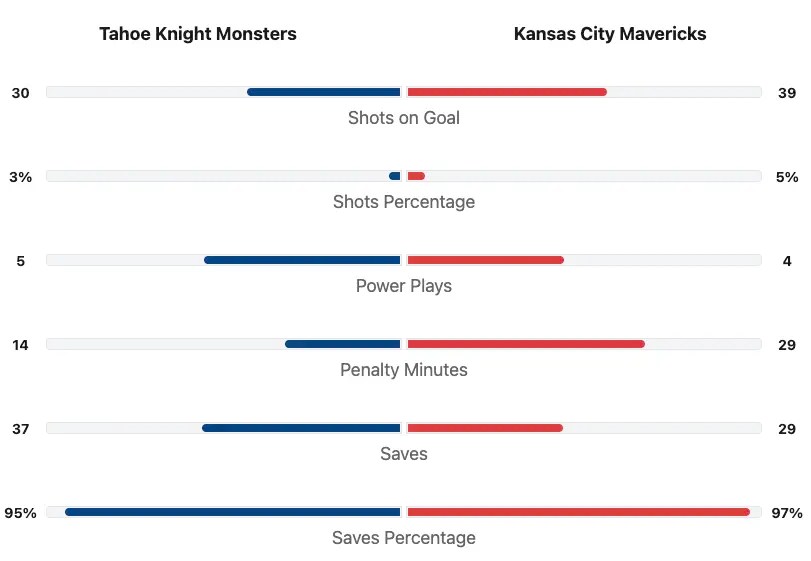
The breakdown from game two between the Kansas City Mavericks and the Tahoe Knight Monsters tells the story of just how tight and competitive this matchup truly was, even beyond the final overtime result. Kansas City finished the night with a 39-30 advantage in shots on goal, an indication that they were able to generate slightly more offensive pressure throughout the game. That edge in volume also translated into a better overall shot efficiency, giving the Mavericks a subtle but important statistical advantage in a game where margins were razor-thin. Special teams played a significant role once again, though neither side was able to fully capitalize. Tahoe finished 1-for-5 on the power play, managing to convert at least one opportunity, while Kansas City went 0-for-4, unable to break through despite multiple chances with the man advantage. In a game decided by a single goal in overtime, those missed opportunities on both sides loomed large and reinforced just how critical execution in special teams situations becomes during playoff hockey. Discipline was another defining factor, with both teams spending considerable time in the penalty box. Tahoe was assessed 7 penalties totaling 14 minutes, while Kansas City had 9 penalties amounting to 29 minutes. Interestingly, this mirrored the penalty-heavy nature of game one, showing a consistent trend in the series where physicality and aggressive play have frequently disrupted flow and created constant special teams situations rather than sustained five-on-five rhythm. Between the pipes, both goaltenders delivered high-level performances that kept their teams in the game deep into overtime. For Tahoe, Jordan Papirny stopped 37 of 39 shots, finishing with an impressive 95% save percentage and providing his team with a strong chance to win despite sustained pressure. On the other side, Kansas City’s Dylan Wells was nearly perfect, turning away 29 of 30 shots for a 97% save percentage, a performance that proved crucial in preserving the Mavericks’ edge and ultimately securing the victory. Taken together, the numbers reinforce the story seen on the ice: a tightly contested playoff battle defined by strong goaltending, heavy penalty minutes, and small margins that ultimately decided the outcome.

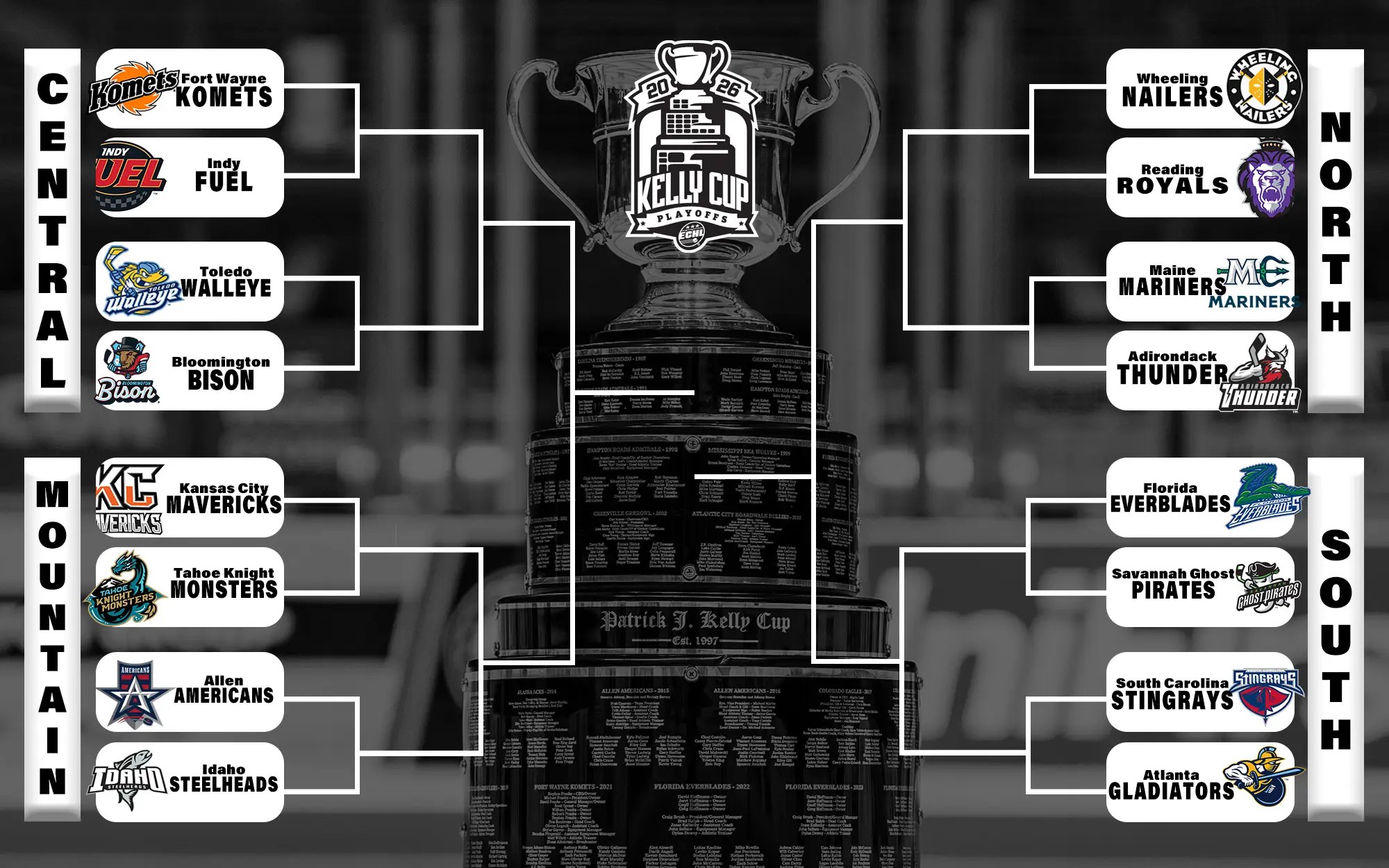
The ECHL playoff picture is starting to take shape as several series begin to swing heavily in one direction, while others remain tightly contested. In the North Division, the Wheeling Nailers have jumped out to a strong 2-0 series lead over the Reading Royals, putting themselves in a commanding position early. Just behind them, the Maine Mariners and Adirondack Thunder are locked in a much closer battle, sitting tied at 1-1 and heading into what is shaping up to be a pivotal stretch of games. In the South Division, momentum is clearly building for the Florida Everblades, who hold a 2-0 lead over the Savannah Ghost Pirates. Meanwhile, the South Carolina Stingrays have taken control of their series against the Atlanta Gladiators, leading 3-1 and moving within reach of advancing. In the Central Division, the Fort Wayne Komets hold a 2-1 advantage over the Indy Fuel, giving them a slight edge as the series progresses. In another dominant showing, the Toledo Walleye are firmly in control, leading the Bloomington Bison 3-0 and standing just one win away from a sweep. Out west in the Mountain Division, the Kansas City Mavericks continue to assert themselves in their matchup with the Tahoe Knight Monsters, holding a 2-0 series lead after back-to-back wins. That series now shifts to Tahoe with the Knight Monsters facing significant pressure to respond on home ice. One of the most decisive outcomes so far comes from the Mountain Division, where the Allen Americans delivered a commanding 4-1 series victory over the Idaho Steelheads.
With the series win, the Americans have officially become the first team to advance to the Mountain Division Finals, while the Steelheads are the first team eliminated from the postseason. It was a statement series performance from Allen, who controlled the matchup and closed it out efficiently. Looking ahead, the Allen Americans now await their opponent in the next round, where they will face either the Tahoe Knight Monsters or the Kansas City Mavericks in the Mountain Division Finals. With Kansas City currently holding the lead, they are in the driver’s seat, but Tahoe still has a chance to mount a comeback as the series returns to their home arena. As the playoffs continue to unfold, the separation between contenders and teams on the brink is becoming increasingly clear, setting the stage for even higher stakes hockey in the rounds to come.

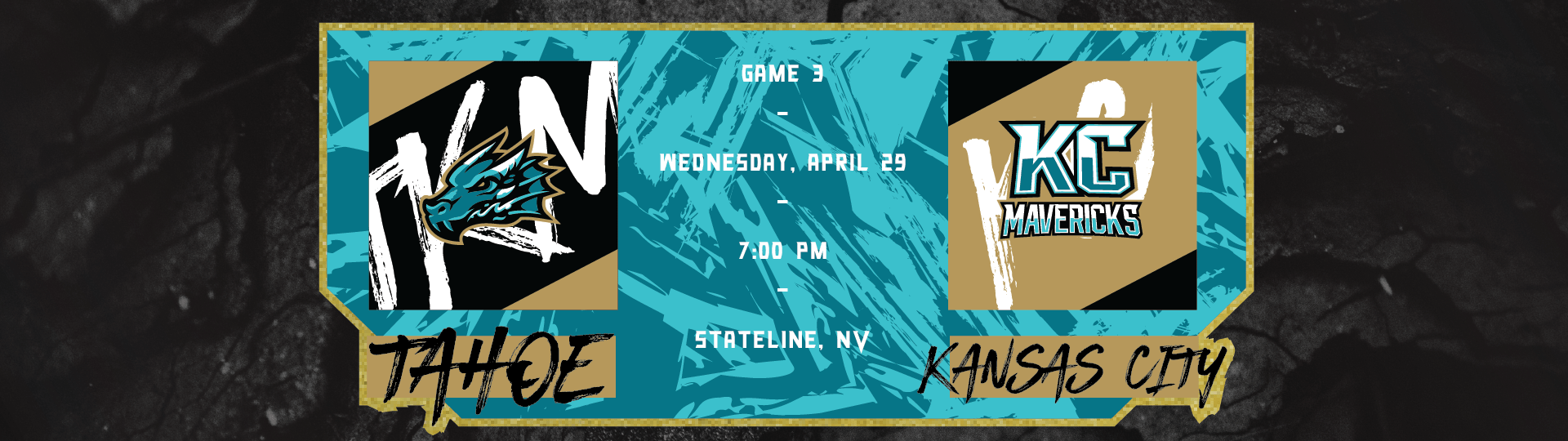
The Tahoe Knight Monsters and the Kansas City Mavericks are set to continue their 2026 ECHL Kelly Cup Playoffs showdown with game three of the Western Conference Mountain Division Semifinals on Wednesday, April 29th. This matchup now shifts to Stateline, Nevada, where the Tahoe Blue Event Center will serve as the backdrop for what is becoming a pivotal moment in the series. Puck drop is scheduled for 7:00 PM, and the stakes could not be higher for the Tahoe Knight Monsters. Down in the series, they return home looking to reset the tone in front of their own fans and capitalize on home-ice energy that has not yet been fully tested in this postseason matchup. After two tightly contested games in Kansas City, both of which went in favor of the Mavericks, Tahoe now finds itself in a position where urgency becomes a major factor. For Kansas City, game three represents an opportunity to maintain control of the series and push one step closer to advancing. The Mavericks have already shown the ability to win in multiple ways (both in regulation and overtime), and now they face the challenge of trying to carry that same consistency into a hostile road environment. With momentum on their side, they will look to silence the home crowd early and extend their series lead. As the series transitions to Nevada, all eyes will be on whether Tahoe can respond under pressure and turn the energy of the Tahoe Blue Event Center into a turning point, or if Kansas City continues to assert itself as the stronger team in a series that has been competitive but tightly controlled at critical moments.



Leave a Reply